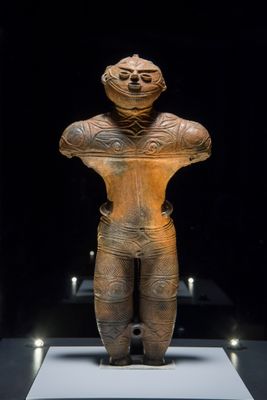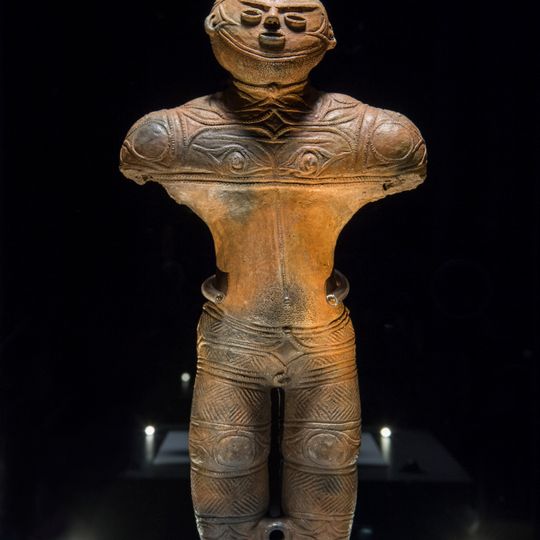
Hollow Dogū, Clay figure at Jomon Cultural Center in Hakodate, Japan
The Hollow Dogū is a clay figure about 42 centimeters tall from the Late Jomon period, displayed at the Jomon Cultural Center in Hakodate. Its small body is hollow inside and covered with geometric patterns carefully carved into the soft clay.
This figure dates to the Late Jomon period about 3,500 years ago and was found in 1975 when a farmer accidentally discovered it while harvesting potatoes in his field. The discovery in Minamikayabe shows how ancient works of art can suddenly emerge from the ground.
The figure shows the craftsmanship of Jomon artists through its hollow construction and fine surface patterns that expressed spiritual and fertility meanings. The detailed work reveals how deeply artistic tradition was rooted in daily life during this ancient period.
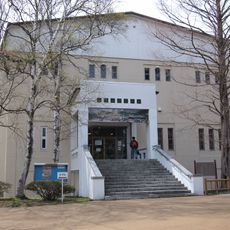
The artwork is located at the Jomon Cultural Center in Hakodate and displayed with special lighting that highlights its fine surface details. Visitors should take time to view the delicate patterns from different angles, as its small size rewards close and careful looking.
The figure received the nickname 'Kakku' through a public naming contest and traveled as a cultural ambassador to the British Museum and the G8 Summit. This unusual journey shows how an ancient Jomon artwork became a modern cultural ambassador.
The community of curious travelers
AroundUs brings together thousands of curated places, local tips, and hidden gems, enriched daily by 92,394 contributors worldwide.