Senshō-ji, Buddhist temple in Yamagata, Japan
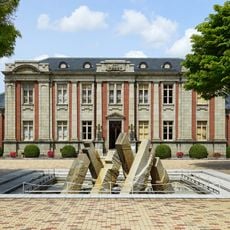
Senshō-ji is a Jōdo Shinshō (Ōtani-ha) temple in Midorichō, Yamagata, formerly Teramachi. Its main hall, entrance gate and large tatami room date from 1703 and form the largest temple building in the city; the study, kitchen and bell tower are earlier, from the Keichō era. Four wrestler statues attributed to Hidari Jingorō stand at the hall's corners.
Founded in 1483 as a hermitage at Takahashi in present-day Tendō by Ganshō, a leading disciple of Rennyo, the 8th head of Hongan-ji, it took the name Senshō-ji under the third abbot Jyuzen. In 1596 Mogami Yoshiaki moved it to Yamagata to pray for his daughter Komahime, executed at 15 in 1595; in 1598 it was relocated to its present site with a 8-chō square estate, and its temple town grew to hold 13 sub-temples.
The temple belongs to the Ōtani-ha branch of Jōdo Shinshō and is named after its mountain name, Saijōzan. Its main image is an Amida Buddha attributed to Kasuga. The temple's origin is tied to the memorial for Komahime, daughter of Mogami Yoshiaki, who was executed at 15 in 1595; Yoshiaki moved the temple to Yamagata the following year for her memorial.
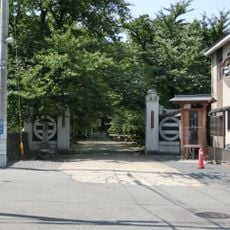
Senshō-ji stands 2.5 km from Yamagata Station; the Yamakō bus stops at Senshōjiguchi, a two-minute walk from the gate. The temple lies just north of the Sasaya Kaidō, in the old Teramachi district where many other temples remain.
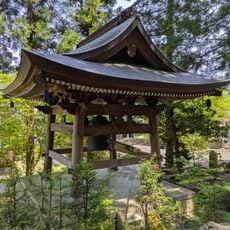
The temple bell, cast in 1606 by Nishimura Dōjin, measures 115.4 cm tall with a 67.2 cm mouth and is a prefectural cultural property; the bell tower housing it shows Momoyama-period carving on its beams. The main hall's four corner wrestler statues are attributed to the sculptor Hidari Jingorō.
The community of curious travelers
AroundUs brings together thousands of curated places, local tips, and hidden gems, enriched daily by 93,275 contributors worldwide.