Nyoirin-ji Temple, Buddhist temple in Yoshino, Japan
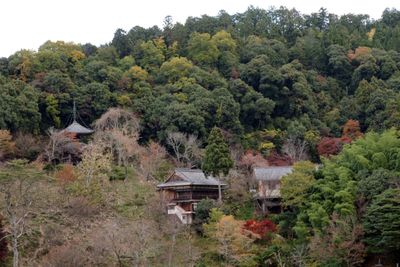
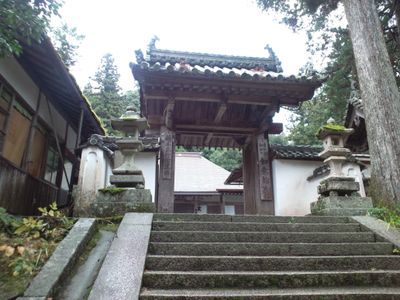
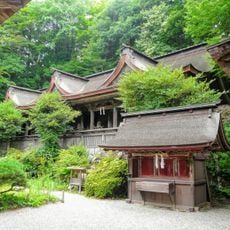
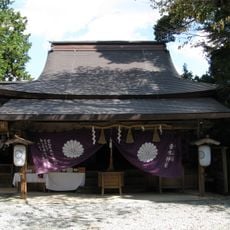
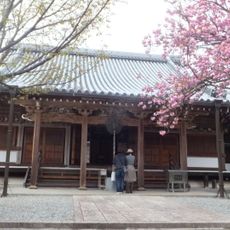
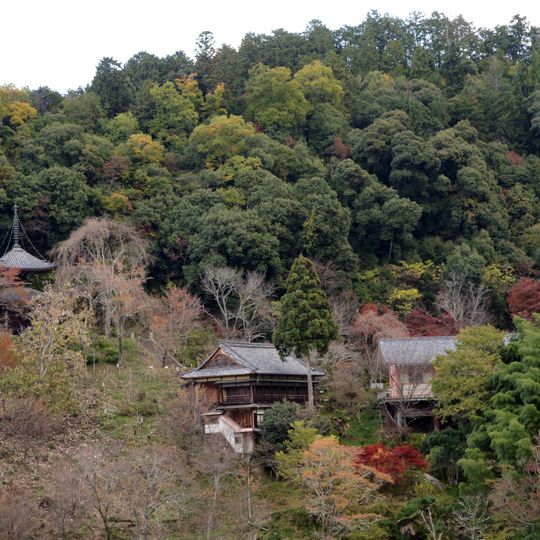
Nyoirin-ji is a Jodo-shu temple on a wooded hillside of Mount Yoshino, separated from Kanjōsen-ji by a valley. Its two-story main hall, the Nyoirin-dō, is dark wood with a hipped cypress-bark roof and an open ground floor; a white-walled stair enclosure projects from its left side. A similar dark-wood building stands higher to the right, reached by a short covered entryway. A tall tiled gate with upturned corners tops a flight of stone steps, flanked by pillars bearing carved plaques and by stone lanterns.
Founded by the monk Nichizō during the Engi era (901–922), Nyoirin-ji became a chokugan-ji when Emperor Go-Daigo established his Yoshino court in the 1330s. Go-Daigo died there without returning to Kyoto and was buried on the hill behind the main hall. The temple declined until 1650, when Bunyo Tetsugyū, said to be a son of Chōsokabe Motochika, rebuilt the main hall and converted it from Shingon to Jōdo-shū.
The temple is stop 30 on the Kinki 36 Fudōson pilgrimage, and its treasure house shows the wooden Zaō Gongen statue carved by the sculptor Genkei in 1226, kept in a cabinet painted with a Yoshino mandala in 1336. The door said to bear Kusunoki Masatsura's farewell poem, scratched with an arrowhead before he left for the Battle of Shijōnawate in 1346, is also kept there.
You can reach the temple by walking from either the station or a bus stop, with the route going through forest paths and stairs. The grounds are on a hillside, so comfortable shoes are important for your visit.
Behind the main hall stands the tomb of Emperor Go-Daigo, who died in Yoshino in 1339 without returning to Kyoto. Unlike most imperial tombs, which face south, this one faces north toward the capital. The tomb and the adjacent grave of Prince Yoyasu are under the Imperial Household Agency's care.
The community of curious travelers
AroundUs brings together thousands of curated places, local tips, and hidden gems, enriched daily by 93,148 contributors worldwide.