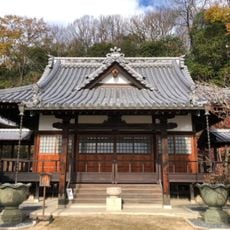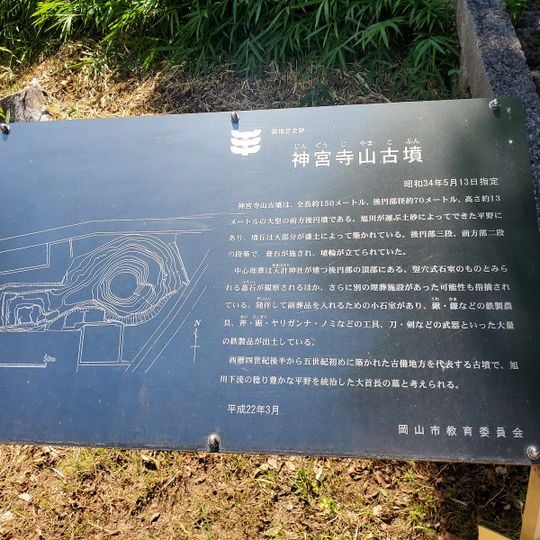
Jingu-ji-yama Kofun, Keyhole-shaped burial mound in Kita-ku, Okayama, Japan.
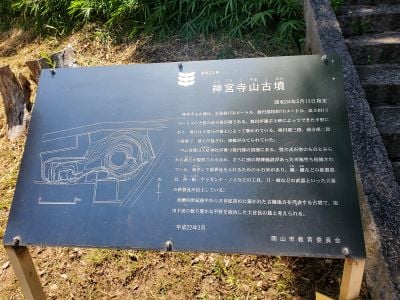
The Jingu-ji-yama Kofun is a keyhole-shaped burial mound with a circular front section connected to a rectangular rear portion that extends significantly across the landscape. The entire structure creates a distinctive profile when viewed from above, dominating the surrounding terrain.
The mound was constructed during the late Kofun period and reflects the construction methods of that era. It received official recognition as a national historic site in 1959, ensuring its preservation.
The site reflects how powerful rulers were honored in ancient times through an imposing earthwork that still shapes the landscape today. The scale and form of the mound reveal the importance placed on this person within their society.
The site is located in Kita-ku in Okayama and stands out clearly from the surrounding landscape, making it easy to spot. Access to the mound itself is restricted, so visitors should plan to view it from designated areas around the perimeter.
Access to the burial site has been heavily restricted since 1849, when looting incidents prompted authorities to impose protective measures. This careful guardianship has kept it a well-preserved example of ancient earthwork construction.
The community of curious travelers
AroundUs brings together thousands of curated places, local tips, and hidden gems, enriched daily by 91,685 contributors worldwide.