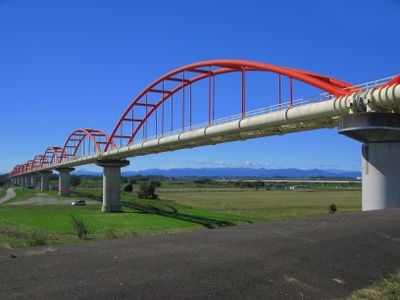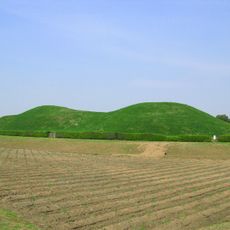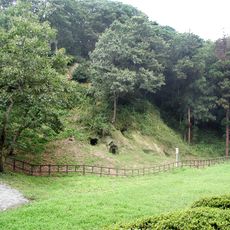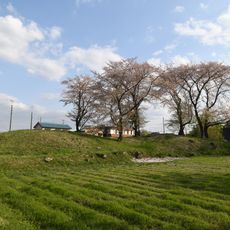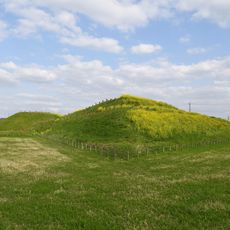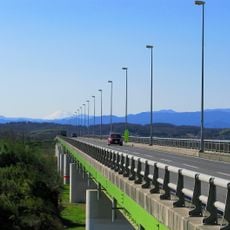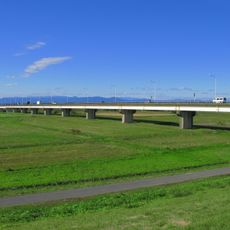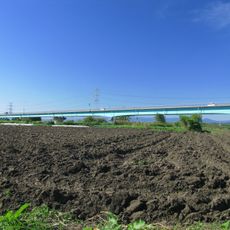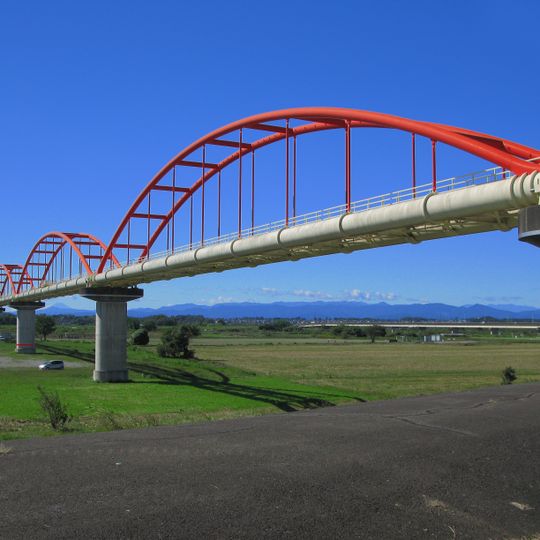
Arakawa Aqueduct Bridge, Navigable aqueduct in Saitama Prefecture, Japan.
The Arakawa Aqueduct Bridge is an engineering structure that spans the Arakawa River while transporting water and allowing vessel passage through its waterway. The design combines a water distribution channel with a navigable pathway, serving both urban and agricultural water needs.
The structure was completed in 1964 by Tokyo's metropolitan government to improve regional water distribution and irrigation. It emerged during Japan's rapid infrastructure modernization following World War II.
The structure reflects Japan's post-war commitment to modernizing its water infrastructure through bold engineering solutions. It shows how the country transformed river management to serve both cities and farming communities.
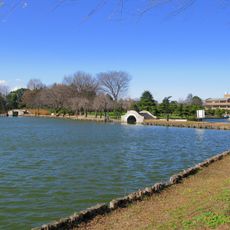
Multiple viewing areas are positioned near the structure along the river to observe both the aqueduct and the water flow beneath it. Visit during daylight hours for the best views of the engineering details and surrounding landscape.
This is one of the world's rare examples where an aqueduct canal can be simultaneously navigated by ships. This dual functionality makes it an unusual solution for combining water management with waterway transportation.
The community of curious travelers
AroundUs brings together thousands of curated places, local tips, and hidden gems, enriched daily by 91,320 contributors worldwide.