Līču-Laņģu klintis, Protected geological natural monument in Liepas pagasts, Latvia
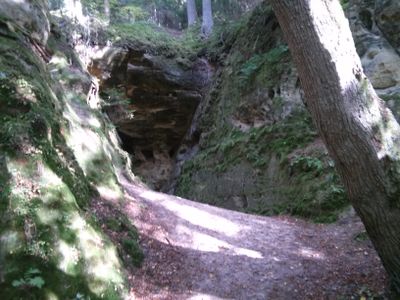
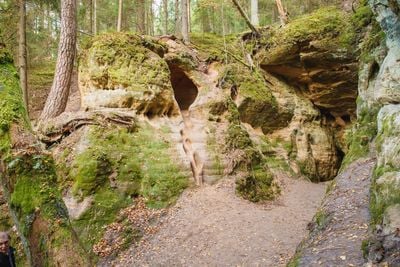
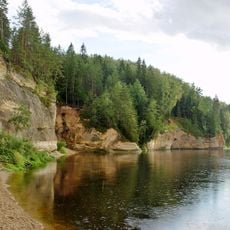
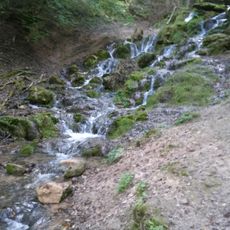
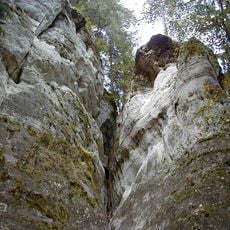
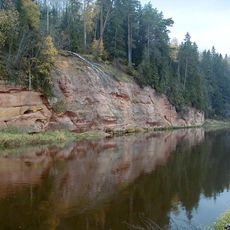
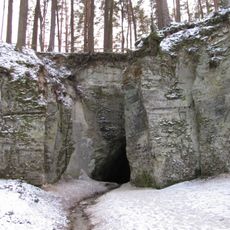
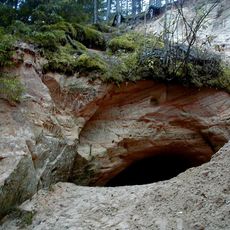
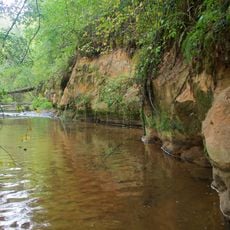
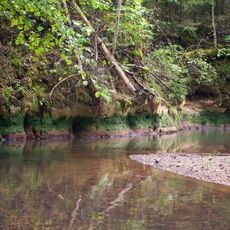
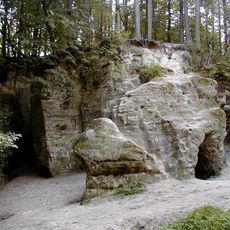
Līču-Laņģu klintis is a protected geological and geomorphological natural monument in Liepas pagasts, Latvia, formed by a long sandstone cliff running along the left bank of the Gauja River. The cliff stretches about 1 kilometer and rises up to 30 meters, with nine caves and niches carved by water and eight natural springs flowing from the rock.
The sandstone walls formed during the Middle Devonian period, when shallow basins and strong currents deposited layers of sediment that hardened over time. Water and erosion then shaped the caves, niches, and springs that are visible today.
The sandstone walls carry engravings from the early 1800s, left by people who visited long before any marked trail existed. Today, visitors come to walk along the rock face and look closely at the red and white patterns formed by iron deposits in the stone.
The site can be visited year-round, but sturdy footwear is necessary because the terrain is uneven and steep in places. The trail starts from a point called Lielā Ellīte and takes around two hours to complete.
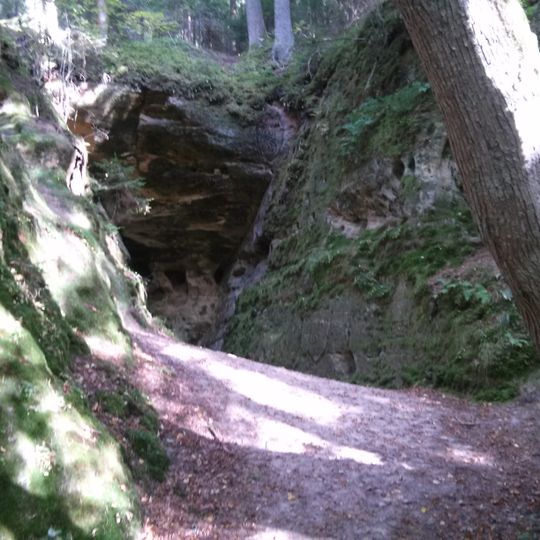
The Great Laņģu Cave stretches nearly 50 meters into the rock face, making it one of the longest sandstone caves in the region. Part of the site is a collapsed cave passage that turned into a deep ravine with walls about 8 meters high.
The community of curious travelers
AroundUs brings together thousands of curated places, local tips, and hidden gems, enriched daily by 90,902 contributors worldwide.