Tangier bullring
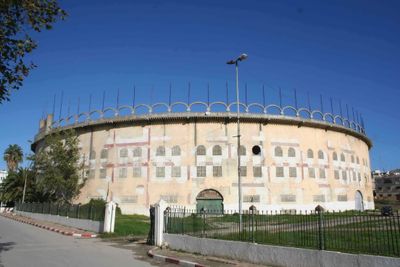
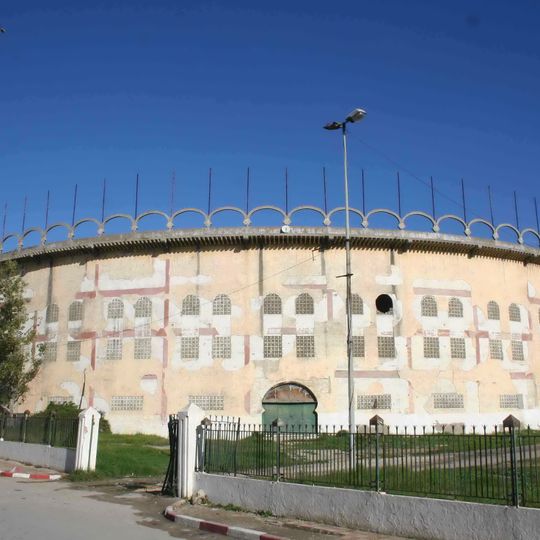
The Tangier bullring is a sports venue with a large circular space surrounded by tiered seating in a simple, functional building made of red brick and concrete. The structure was designed to hold around 13000 spectators and includes multiple entrances, stables, and medical facilities.
The arena was built in 1949 by Spanish engineers led by Francisco Rodríguez-Álvarez López and opened in 1950, inspired by the famous Plaza de Toros in Seville. After Moroccan independence in 1956, bullfighting declined in importance, use dropped off, and the arena was eventually abandoned after 1970.
The bullring was long seen as a symbol of colonial heritage and represents Spanish cultural traditions that mixed with North African influences. Today, many residents view the site as part of their city's complex past, blending different historical influences together.
The arena is located in the Charf-Mghogha neighborhood, about three kilometers east of the city center and is easily reached by bus and taxi from downtown. The best time to visit is in the late afternoon, when the light highlights the structural details of the site.
The first matador to use the arena was a Spaniard named Pepito Medina, who was the first local person to perform bullfights with picadors. Several notable fighters came from Spain, including Primo Díaz y Campos, who arrived after the Spanish Civil War and later worked in the city.
The community of curious travelers
AroundUs brings together thousands of curated places, local tips, and hidden gems, enriched daily by 91,402 contributors worldwide.