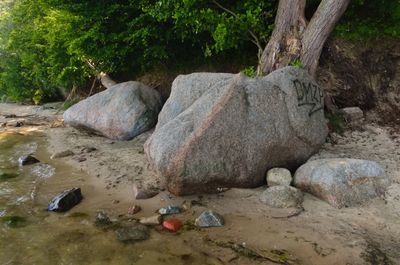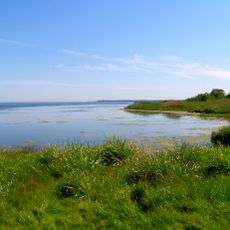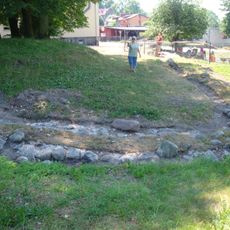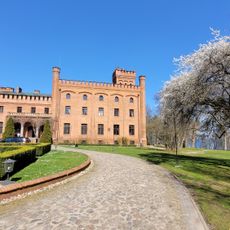
Dwunastu Apostołów, Natural monument and glacial erratic formation in Puck, Poland.
Dwunastu Apostołów is a group of twelve large boulders located near Puck Bay, formed through ancient glacial processes that transported these stones from distant sources. The largest of these stones measures roughly 7 meters in circumference and rises about 1.6 meters above the ground.
These rocks were transported to this location by glaciers thousands of years ago during the last ice age and later exposed through erosion to their current form. In 1955, they received official protection status as a natural monument to preserve their geological significance for understanding the region's landscape history.
These boulders hold meaning in local stories about the coast, and visitors come to photograph and experience them as monuments to natural forces. The stones serve as tangible reminders of how nature shapes the places where people live.
The boulders are accessible through marked paths along the Puck clifftop and offer several viewpoints with information boards about the site. Visitors should keep in mind that routes can change with weather conditions and flat footwear is recommended for comfortable walking.
The name refers to the number of stones, though some have been lost or disappeared into the water over time as the shoreline shifted. Storm waves from the bay continuously reshape how these rocks appear and their exact position along the coast.
The community of curious travelers
AroundUs brings together thousands of curated places, local tips, and hidden gems, enriched daily by 90,898 contributors worldwide.