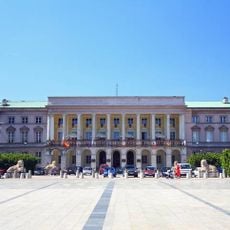
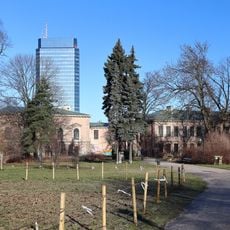
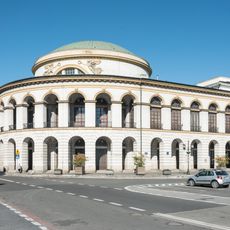
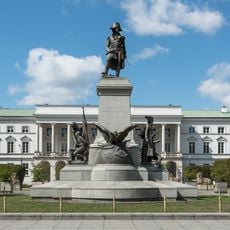
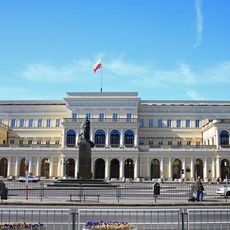
Poległym w Służbie i Obronie Polski Ludowej Monument, Communist-era monument in Iron-Gate Square, Warsaw, Poland.
The Pomnik Poległym w Służbie i Obronie Polski Ludowej was a monument of 60 tons of granite and bronze, measuring 16 by 20 metres, unveiled on 20 July 1985 at plac Żelaznej Bramy. The sculptor Bohdan Chmielewski designed it; it was the largest monument erected in Warsaw after the Second World War. It was dismantled in 1991 and taken to the municipal roads depot in Żerań.
The structure was erected in 1985 to mark 40 years of the Polish People's Republic. Following political changes in the early 1990s, it was removed in 1991 when new leadership sought different symbols for the nation.
Varsovians nicknamed the monument "pomnik utrwalaczy" (monument of the consolidators) or "UBelisk", a play on the name of the communist security service. The nickname reflected the hostility many residents felt toward the official memorial, and it became a byword for the state's contested use of public space.
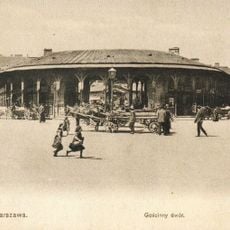
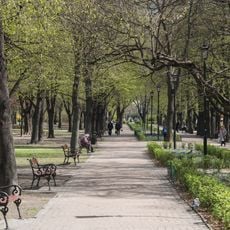
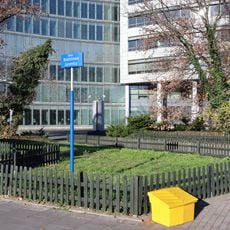
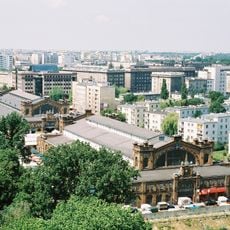
The original structure no longer exists at its original location, so there is nothing to see on the site itself. To learn about the monument and its role in Warsaw's history, visitors can consult local museums or look at archived photographs and historical documentation.
At 16 by 20 metres, it was the largest monument unveiled in Warsaw after World War II. Critics nicknamed it "UBelisk", and after its 1991 dismantling the granite and bronze pieces were taken to a municipal roads depot in Żerań; fragments are now shown at the Fundacja Minionej Epoki park in Ruda Śląska.
The community of curious travelers
AroundUs brings together thousands of curated places, local tips, and hidden gems, enriched daily by 93,149 contributors worldwide.