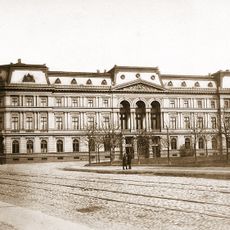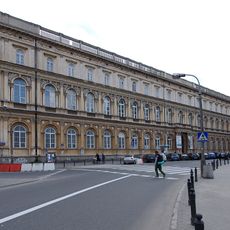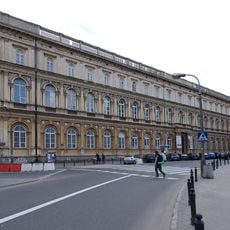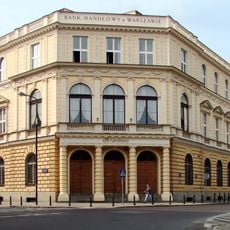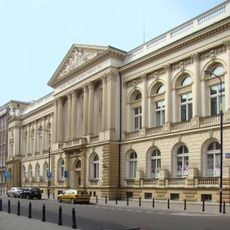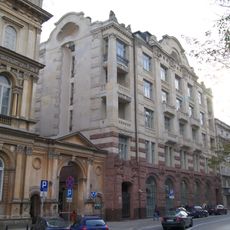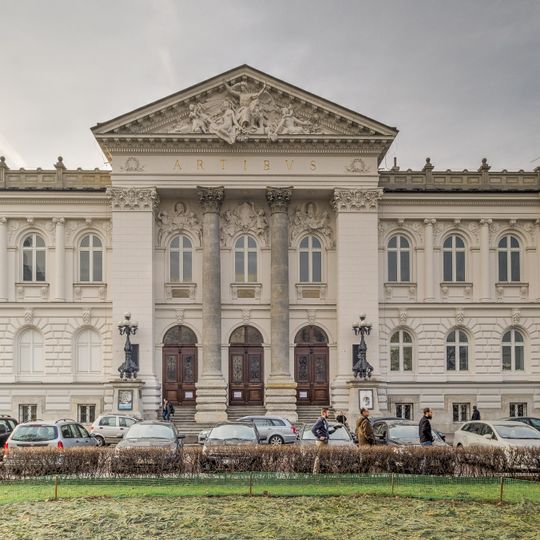
Building of the Zachęta National Gallery of Art, Art gallery palace in Śródmieście, Poland
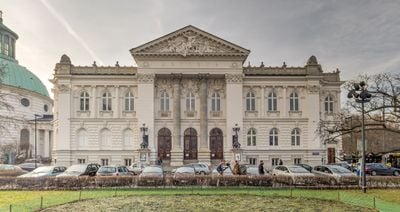
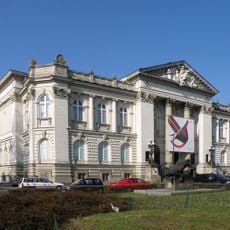
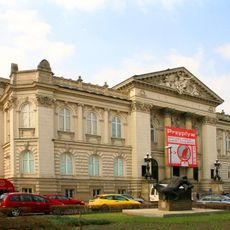
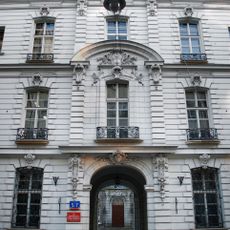
The Building of the Zachęta National Gallery of Art is a late historicist palace on Plac Małachowskiego in Warsaw's city center, featuring a symmetrical facade with classical columns and elaborate stonework. A distinctive dome caps the main entrance and defines the building's profile on the square.
The building opened in 1900 and became a national landmark within decades when President Gabriel Narutowicz was assassinated there in December 1922. This tragedy shaped how the palace is remembered as a place of historical weight for the nation.
The building hosts rotating exhibitions of contemporary art from around the world, supported by lectures and workshops that bring the work to life. Visitors can engage with international artistic practice and participate in various cultural events throughout the year.
The gallery is open Tuesday through Sunday with extended hours on Thursday, and multilingual guided tours are available. Plan time to explore the multiple gallery spaces, and check the current programming before your visit.
Stefan Szyller, the renowned Warsaw architect, created his first major work with this building, which later became the foundation of his career. The original exhibition halls are equipped with natural overhead lighting systems that have been illuminating artworks naturally since 1900.
The community of curious travelers
AroundUs brings together thousands of curated places, local tips, and hidden gems, enriched daily by 60,000 contributors worldwide.