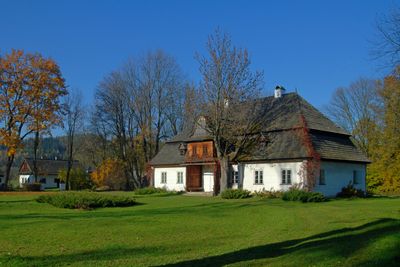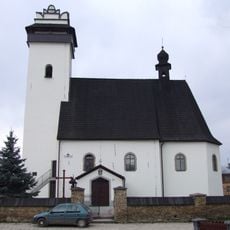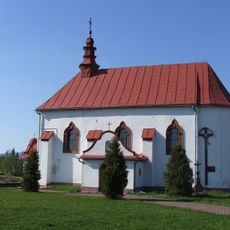
Dwór w Łopusznej, Historic manor in Łopuszna, Poland.
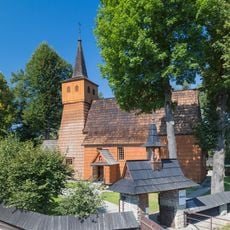
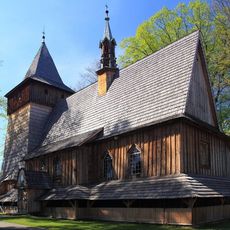
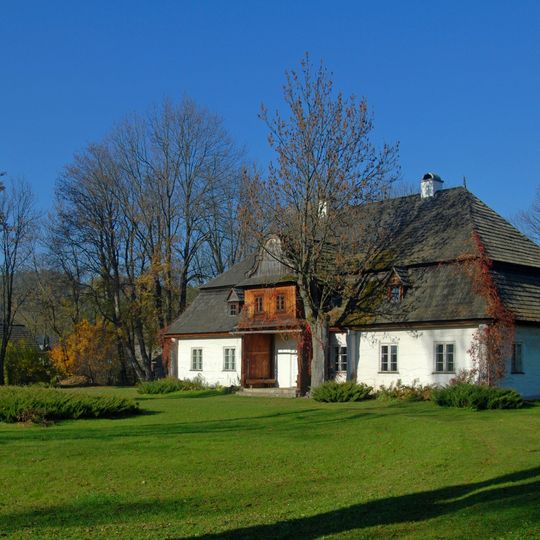
Dwór w Łopusznej is a single-storey wooden manor on a rectangular plan, covered by a shingled mansard-style roof and surrounded by a wooden fence. The estate at Gorczańska Street 2 also includes a small servants' house called gacek, a stable with coach house, a granary, cattle sheds and cellars. Since 1978 it has been a branch of the Tatra Museum in Zakopane.
The manor was built between 1787 and 1790 by Romuald Lisicki, a Bar confederate. His daughter Ludwika married Leon Przerwa-Tetmajer, who owned Łopuszna from 1824 until his death in 1881. In 1832 the November Uprising fugitive Seweryn Goszczyński hid here and later described the manor in his Dziennik podróży do Tatrów. After 1949 the property was nationalized, and since 1978 it has been a branch of the Tatra Museum.
The manor takes its name from the Tetmajer family, who owned Łopuszna from 1824, when Leon Przerwa-Tetmajer received the village as his wife Ludwika's dowry. The poet Seweryn Goszczyński hid here in 1832 after the November Uprising and later described the manor in his Dziennik podróży do Tatrów. Guests also included Stanisław Worcell, Bohdan Zaleski and the leaders of the Chochołów uprising, Julian Goslar and Jan Kanty Andrusikiewicz.
Visiting is best arranged through the Tatra Museum in Zakopane, which operates this location as a branch. Plan your visit in advance, as access may be limited and staff availability varies depending on the season.
The manor's wooden outbuilding called "gacek" housed the poet Bohdan Zaleski; it originally served as the kitchen and servants' quarters. Nearby stands a small cellar dwelling, a "lamus", where Seweryn Goszczyński hid in 1832 after the November Uprising and later described the manor in his 1851 travel diary.
The community of curious travelers
AroundUs brings together thousands of curated places, local tips, and hidden gems, enriched daily by 93,119 contributors worldwide.