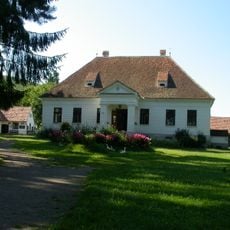
Putna-Vrancea Natural Park, Protected mountain area in Vrancea County, Romania.
Putna-Vrancea Natural Park is a protected area in the Carpathian mountains of Vrancea County, Romania, covering forested slopes, gorges, waterfalls, and high-altitude pastures. The terrain rises from river valleys to open mountain ridges, giving the park a varied landscape across its different zones.
The park was created by Government Decision No. 2151 of 30 November 2004, published in Monitorul Oficial No. 38 of 12 January 2005. It covers the Putna River basin and the Mordanu and Goru massifs, overlapping the Putna-Vrancea Natura 2000 site and six nature reserves, among them Putna Waterfall, Groapa cu Pini and Mount Goru.
The park area holds several wooden churches listed as historic monuments: Saint Nicholas in Nistorești and in Păulești, both 18th-century, the Dormition of the Mother of God in Valea Neagră, dated 1755, and the Holy Archangels in Vetrești-Herăstrău, also 18th-century. The Dormition church in Lepșa was built between 1930 and 1936.
The park is crossed by National Road DN2L, which links Panciu to Lepșa and gives road access to the communes of Nistorești, Păulești, Soveja and Tulnici. The Putna Waterfall, Groapa cu Pini, Mount Goru, Lepșa-Zboina Forest, Strămtura-Coza and Tișița Valley reserves lie within its boundaries.
The park overlaps the Putna-Vrancea Natura 2000 site and holds six nature reserves: Putna Waterfall, Groapa cu Pini, Mount Goru, Lepșa-Zboina Forest, Strămtura-Coza and Tișița Valley. Its 15 natural habitat types range from Luzulo-Fagetum beech woods to alpine Pinus mugo scrub. Look for the Carpathian newt and the alpine longhorn beetle Rosalia alpina.
The community of curious travelers
AroundUs brings together thousands of curated places, local tips, and hidden gems, enriched daily by 94,585 contributors worldwide.