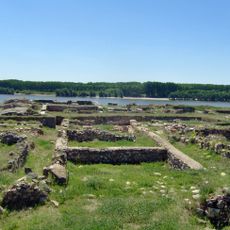
Civitas Tropaensium, Roman castrum in Adamclisi, Constanța, Romania.
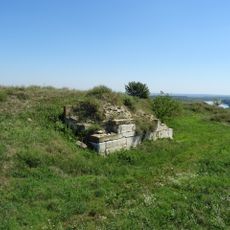
Civitas Tropaensium is a walled Roman city and archaeological site at Adamclisi, with remains of its east gate, a main street with a central drain, and four Christian basilicas. The city was built around 109 AD and rebuilt under Constantine with horseshoe-shaped towers.
The settlement was founded around 109 AD following Emperor Trajan's victory over the Dacians and became an important military and administrative center in the region. It remained active for several centuries before eventually being abandoned, showing its long importance to the Roman Empire.
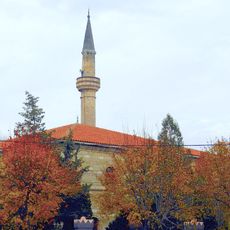
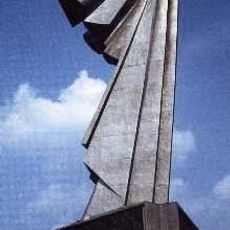
The city's name comes from the Tropaeum Traiani, the trophy monument built in 109 AD. The four Christian basilicas excavated on the site show the city's shift from pagan to Christian worship. The Turkish name Adam Kilisesi, meaning "man's church", was given to the village founded in the 14th century among the ruins.
The site lies 2 km east of Adamclisi village, near the Tropaeum Traiani monument. The terrain is flat and the excavated area is compact, so a half-day visit suffices. The main east gate, rebuilt under Constantine with horseshoe-shaped towers, and the 4th-century main street with its central drain and ceramic water pipeline are the easiest features to trace on the ground.
The main street, rebuilt in the early 4th century, keeps a central drain for rain and wastewater with an unusual feature: a step carrying a ceramic pipeline for the water supply. The east gate, first built under Trajan with two rectangular towers, was rebuilt under Septimius Severus with a double gate and a square internal tower, and in 316 under Constantine and Licinius with horseshoe-shaped towers and a 2.9 m high copy of Trajan's Trophy.
The community of curious travelers
AroundUs brings together thousands of curated places, local tips, and hidden gems, enriched daily by 94,766 contributors worldwide.