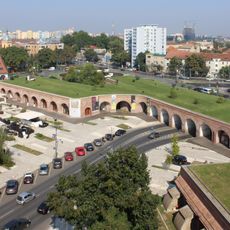
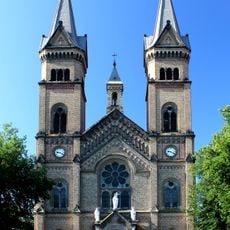
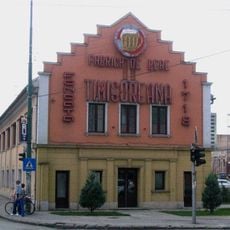
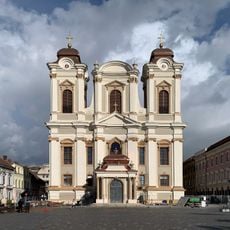
Urban site "Fabric", Historic district near central Timișoara, Romania.
Fabric extends through the central-eastern section of Timișoara as a district blending industrial and residential buildings from different time periods. The preserved structures show how the area developed from small workshops into a larger manufacturing zone.
The site was laid out after 1744, when Habsburg authorities approved two zones at the edge of the Non Aedificandi esplanade around Timișoara's fortress for Orthodox Rascians displaced from Palanca Mare. They settled around today's Piața Traian and along the streets Dacilor and Ștefan cel Mare. Jews from Palanca Mare settled north of the square, and Germans later built the German Fabric south of a now-dry Bega branch.
The area was settled in 1744 by Orthodox Rascians (Serbs) around what is now Piața Traian, then called Hauptplatz, later Fö tér and Kossuth tér. Jews from Palanca Mare, barred from living inside the fortress, settled north of the square in a single-storey quarter resembling an eastern European shtetl. Germans later built the German Fabric south of a now-dry branch of the Bega.
The area is accessible by tram and you can walk through the streets to view the preserved buildings and their architectural features. Planning several hours allows you to explore at a comfortable pace and notice the different styles throughout the district.
The site preserves the core of the Rascian Fabric, settled in 1744 by Orthodox Serbs moved from Palanca Mare. Its streets around Piața Traian were laid out along the Non Aedificandi line, and the area later became known for its interwar shops, including the Kovács pharmacy in the Nägele Palace.
The community of curious travelers
AroundUs brings together thousands of curated places, local tips, and hidden gems, enriched daily by 94,489 contributors worldwide.