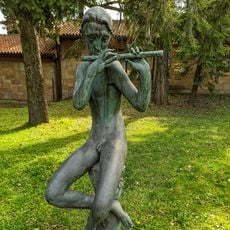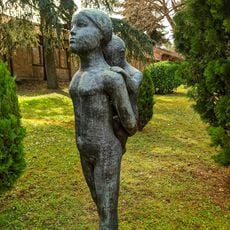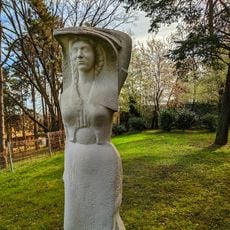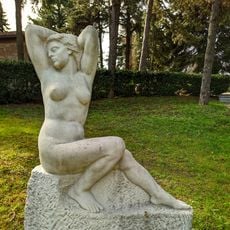
Museum of Yugoslav History, History museum in Dedinje district, Belgrade, Serbia
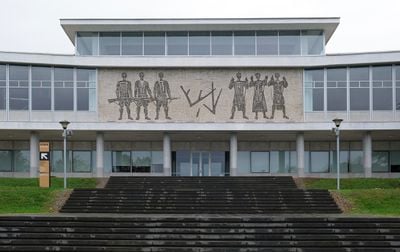
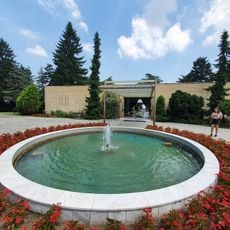
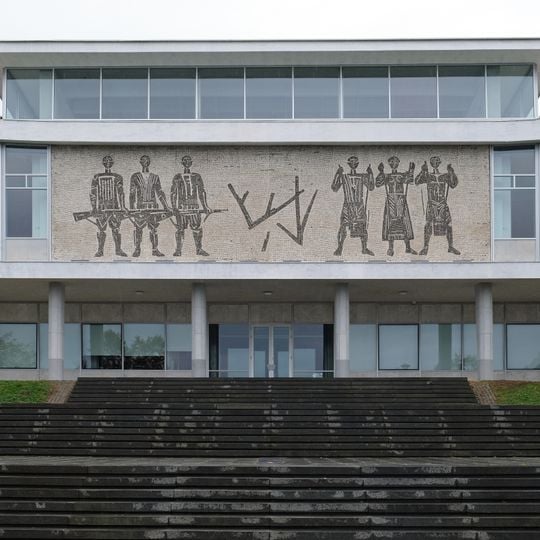
The Museum of Yugoslavia occupies three buildings in a 3.2-hectare park in Dedinje: the 25 May Museum, the House of Flowers and the Old Museum, totalling 5,253 m². The 25 May Museum, opened in 1962, has a flat roof and a facade of horizontal bands: a strip of windows above a pale stone band, then a textured stone panel with a dark relief of six standing figures holding staffs and with raised arms, and below it a recessed glazed level with columns and glass doors reached by broad dark stone steps.
The institution was founded in 1996 and merged the earlier 25 May Museum, established in 1962 for President Tito's 70th birthday. The House of Flowers became his burial place later, adding a personal historical layer to the site.
The museum's name changed in 2016 from the Museum of the History of Yugoslavia to the Museum of Yugoslavia. Its grounds in Dedinje hold three buildings: the 25 May Museum, the House of Flowers and the Old Museum. Many visitors come on 25 May, Tito's official birth date, and treat the site as a shrine to "better times".
The site is best reached on foot or by public transit, as the streets in this district are easy to navigate. It is wise to allow an hour or two to view the exhibition without rushing and to take in the details.
The Memorial Collection (Villa "Mir") held gifts Tito received from world leaders, among them a Corinthian helmet from the late 7th century BC given by King Paul of Greece and a horse sabre with a diamond-studded hilt from Stalin. The museum's online photo archive, launched in 2013, gives access to 130,000 photographs taken over 33 years at 1,083 locations in 93 countries.
The community of curious travelers
AroundUs brings together thousands of curated places, local tips, and hidden gems, enriched daily by 94,155 contributors worldwide.