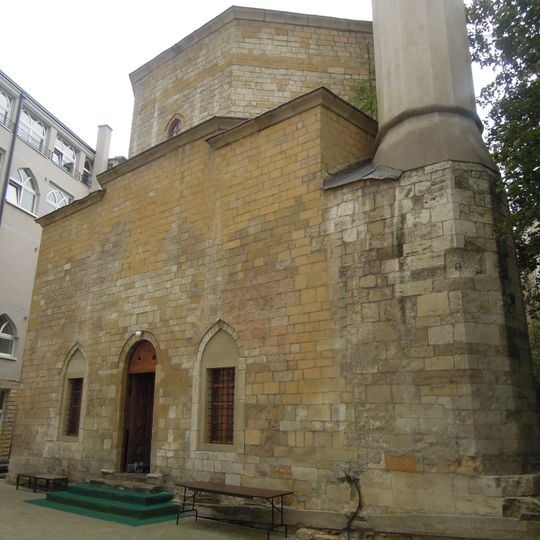
Bajrakli Mosque, Ottoman mosque in Dorćol district, Belgrade, Serbia.
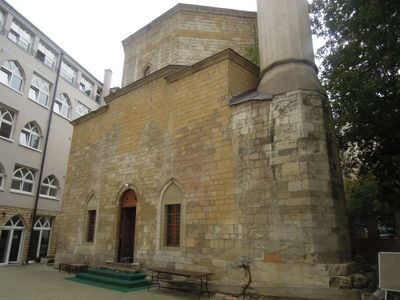
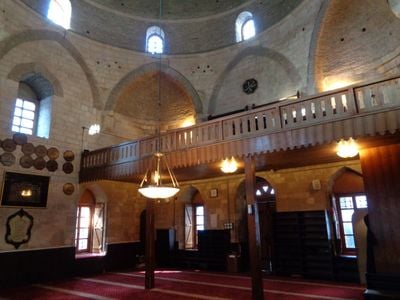
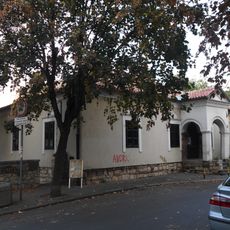
Bajrakli Mosque is a single-space stone building with a square plan, an octagonal dome on squinches and a minaret on the northwest side. Its rough-cut tan, yellow and grey stone walls have pointed-arch openings with dark grilles; a green raised platform with steps leads to the door. Inside, a wooden gallery with carved railing runs above the entrance, and a large white glass lamp hangs from a long chain beneath the pale grey dome.
Built around 1575, the mosque is one of 273 mosques and mesjids recorded in Ottoman Belgrade by the traveller Evliya Çelebi. It was first named after its endower, the cloth merchant Čohadži-Hajji Alija. During Austrian rule from 1717 to 1739 it served as a Catholic church, and after the Ottoman return it was restored in 1741 by Hussein-beg, the ćehaja of Ali-pasha, when it was known as Hussein-beg's or Hussein-ćehaja's mosque. By the late 18th century it acquired the name Bajrakli.
The mosque remains the last Islamic place of worship in Belgrade and serves the Muslim community as a space for regular prayer. It shapes the character of the neighborhood and shows how different faiths coexist in the city today.
The building is located in the old town at 11 Gospodar Jevremova Street. Visitors should wear appropriate dress and come at times outside of daily prayers.
The name Bajrakli comes from the practice of raising a flag to signal prayer times, as the word derives from Turkish meaning flag. This tradition is no longer in use, but the name preserves a memory of how the mosque once functioned.
The community of curious travelers
AroundUs brings together thousands of curated places, local tips, and hidden gems, enriched daily by 93,855 contributors worldwide.