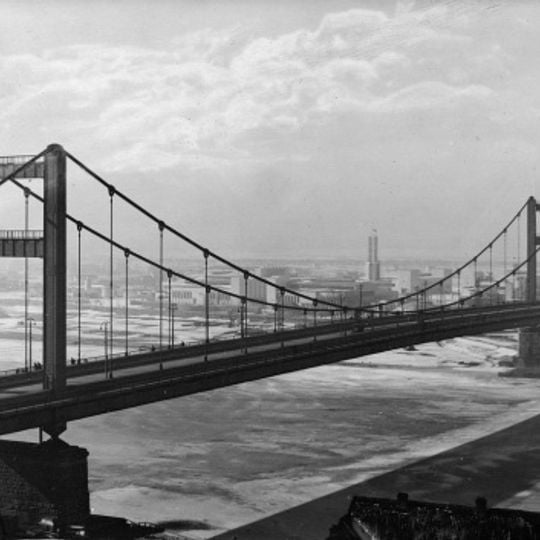
King Alexander Bridge, Suspension bridge in Belgrade, Serbia
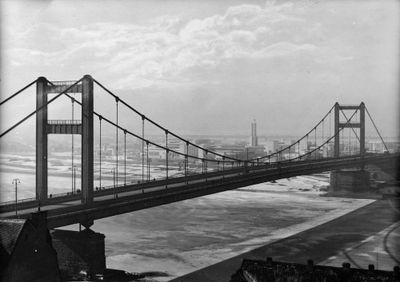
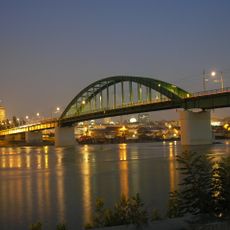
King Alexander Bridge was a suspension structure spanning the Sava River and linking different parts of Belgrade while integrating three tram lines into its design. The construction combined steel cables with reinforced concrete and functioned as a major transportation corridor for the city.
Built in 1934 and named after King Alexander I of Yugoslavia, it was the first permanent crossing of this kind since 1688. Following its destruction in World War II, sections of the original structure were later incorporated into subsequent construction projects.
The bridge represented a way to connect previously isolated neighborhoods and shaped how people moved through the city for generations. It became part of daily life, carrying pedestrians, trams, and vehicles in a rhythm that defined urban travel patterns.
Since the original structure was destroyed, visitors can only view the remaining pylon sections that now serve as foundations for newer structures. It can be seen from the water or from certain vantage points along the riverbanks.
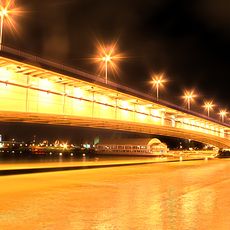
The surviving pylons from the original structure were not torn down after the war but were instead reused as foundations for Branko's Bridge, completed in 1956. This turned the old sections into a hidden foundation for a newer transportation link across the river.
The community of curious travelers
AroundUs brings together thousands of curated places, local tips, and hidden gems, enriched daily by 90,921 contributors worldwide.