Kursk Magnetic Anomaly, Magnetic anomaly in southwestern Russia
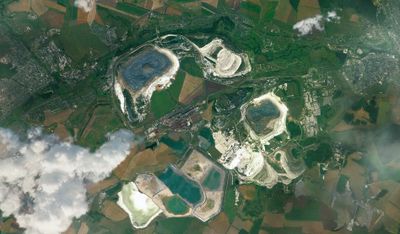
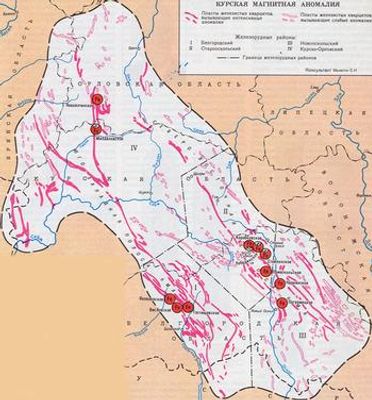
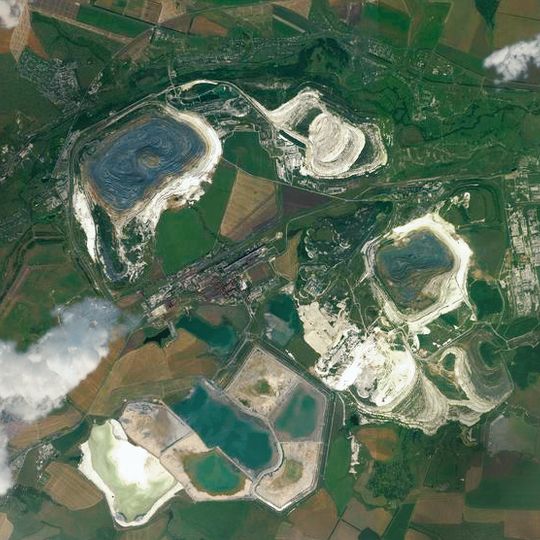
The Kursk Magnetic Anomaly is a geological zone in southwestern Russia where underground iron ore deposits stretch across nearly 30,000 square kilometers beneath the regions of Kursk, Belgorod, and Voronezh. Four main deposits lie buried at varying depths, some reaching several hundred meters below ground level.
Russian astronomer Pyotr Inokhodtsev observed unusual fluctuations in the Earth's magnetic field over this region in 1773 during the General Land Survey of the Russian Empire. Geologists later confirmed the massive iron ore deposits that caused this magnetic disturbance.
The scientific research of this geological formation shaped the development of magnetic survey methods and mineral exploration techniques in Russia.
The geological feature lies underground and is not directly accessible to visitors, though some surface mines in the region are visible from roads. Compasses often fail to work reliably in the area because of the magnetic disturbance.
The magnetic field here reaches 22 nanoteslas, making it the largest measured anomaly of its kind on Earth. Instruments in the area often show deviations of several degrees compared to the normal geomagnetic north pole.
The community of curious travelers
AroundUs brings together thousands of curated places, local tips, and hidden gems, enriched daily by 90,753 contributors worldwide.