Apple orchards in Korochansky District, Agricultural landmark in Korochansky District, Russia.
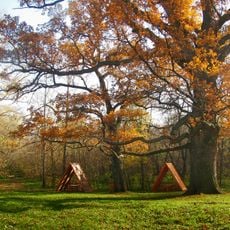
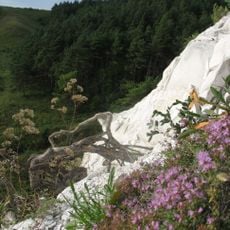
The Korocha orchards are fruit gardens around the town of Korocha in Belgorod Oblast, not a single walled site. In 1786 the town and its district counted 98 orchards; by the late 19th century the Korochansky Uyezd orchards covered 74 desyatins with 22,265 trees, of which 7,500 were apple trees. Growers grafted cultivated varieties onto wild apple and pear rootstocks, and many peasant orchards, called levadas, kept century-old apple trees.
In the first half of the 17th century much of Korochansky Uyezd was covered with wild apple and pear thickets. Settlers familiar with horticulture grafted cultivated varieties onto the wild rootstock instead of clearing it, turning the woods into orchards. In 1786 the town and district counted 98 orchards; by the late 19th century the uyezd had 74 desyatins and 22,265 trees, 7,500 of them apple. In 1892 the horticulturist Nikolai Kichunov arrived, ran courses for teachers and a congress of growers, and in 1896 opened a three-year school of garden workers, the base of the Korocha agricultural technicum in 1929.
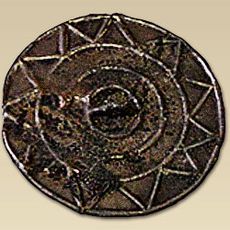
Korocha's coat of arms, granted in 1779 when the town became a district centre of the Kursk viceroyalty, shows large apples in a silver field because the town carried on a notable trade in them. Local tradition holds that Ivan Michurin, visiting in 1888, saw the orchards around the town and called Korocha a "second Crimea".
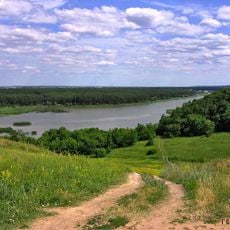
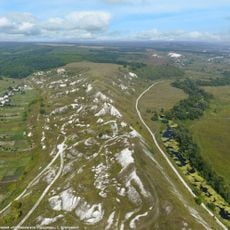
The orchards lie around Korocha in Belgorod Oblast, about 50 km south of Belgorod; the M-2 highway passes through the town. The Korochansky fruit nursery and the commercial orchards of ZAO Korochansky plodopitomnik, which entered Russia's top ten horticultural farms in 2012, are working enterprises, so visits should be arranged with them in advance. The terrain is open steppe and walking is on field tracks.
The soil in the Belgorod region is made up largely of black earth, a dark and nutrient-rich layer that gives the apples a flavor different from those grown in neighboring areas. Some of the varieties grown here are rarely found outside this part of Russia.
The community of curious travelers
AroundUs brings together thousands of curated places, local tips, and hidden gems, enriched daily by 93,163 contributors worldwide.