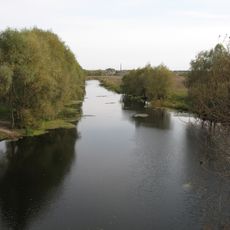
Dmitrievka site of ancient settlement, Ancient hillfort in Shebekinsky District, Russia
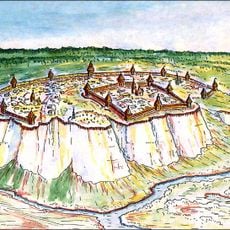
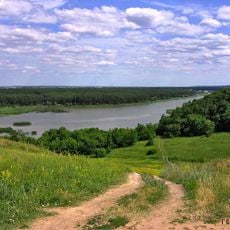
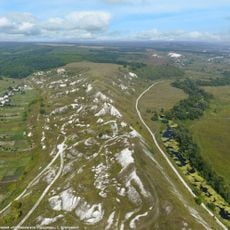
The Dmitrievka site is an archaeological complex of the Saltovo-Mayaki culture on the right bank of the Korocha River near the villages of Dmitrievka and Dobroye. It consists of a fortress, two unfortified settlements and a burial ground. The fortress was built by Alans in the 8th century from chalk blocks; its wall was 4–4.5 m thick and about as high. Excavations uncovered 20 dwellings and 161 burials, most in catacombs cut into hard ground.
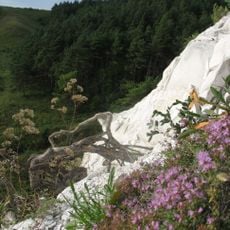
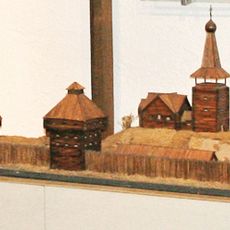
A fortified settlement stood on the 50-metre promontory in the early Iron Age, in the 1st millennium BC. In the 8th century, during the Khazar Khaganate, Alans built a fortress of chalk blocks with walls 4–4.5 m thick and about as high, sheltering the population of the open villages below. In the early 10th century the fortress was destroyed during the Pecheneg invasion.
The burial ground held 161 graves, most cut as catacombs into hard ground. Men were laid out on their backs, women on their side with bent knees; graves contained sabres, bows, arrows, pottery and horse sacrifices, sometimes with harness. S. A. Pletnyova first identified burials of warrior men and young women placed on a layer of coal, which she linked to a rite of posthumous marriage.
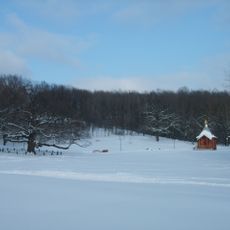
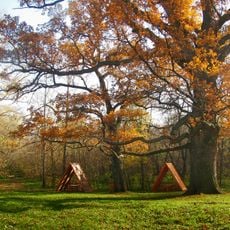
The site is accessible year-round and allows visitors to view the remaining fortification traces and excavated materials across the terrain. Wearing appropriate footwear is recommended as the elevated terrain can be uneven in places.
The cemetery holds 161 burials, most cut as catacombs into hard ground. S. A. Pletneva first identified here men buried as warriors and young women laid on a layer of coal, which she read as linking the pair in a posthumous wedding rite.
The community of curious travelers
AroundUs brings together thousands of curated places, local tips, and hidden gems, enriched daily by 94,236 contributors worldwide.