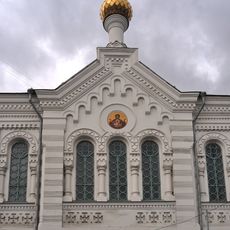
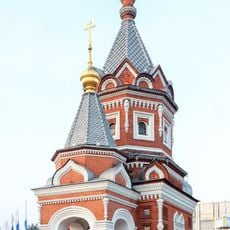
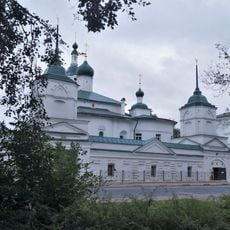
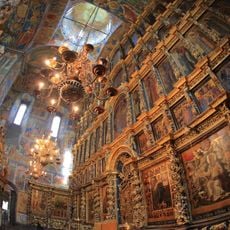
Yaroslavl Art Museum, Art museum in Yaroslavl, Russia.
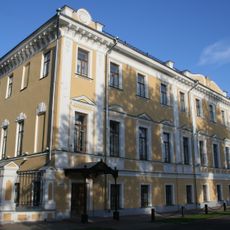
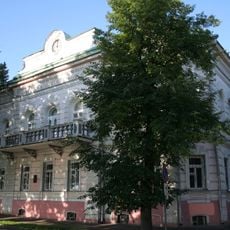
The Yaroslavl Art Museum is housed in the former governor's palace on the Volga embankment, built in 1821-1823 and remodelled in the 1860s. Its main complex also includes the 17th-century Metropolitan's Chambers and the 19th-century Sorokina merchant house. The collection holds more than 65,000 pieces, from 13th-century Yaroslavl icons to Russian avant-garde works of 1900-1930.
The museum was founded in 1919 and quickly became the largest art collection in the region. Its establishment followed the major changes that Russia underwent after the Revolution.
The museum's name comes from the Yaroslavl Art Society, founded in 1909 by local artists, Demidov Lyceum teachers and historians who campaigned for a city gallery. Its icon collection, kept in the 17th-century Metropolitan's Chambers, includes the 13th-century Christ Pantocrator of the Yaroslavl school. Concerts of classical and modern music are held in the museum.
The grounds can be explored on foot and it is easy to navigate between the different rooms of the complex. Visitors should wear comfortable shoes, as viewing multiple halls involves considerable walking.
The museum's collection grew from about 1,600 items in early 1928 to over 65,000 pieces today, including a 13th-century Christ Pantocrator from the Yaroslavl icon school and semi-primitivist portraits of local townspeople.
The community of curious travelers
AroundUs brings together thousands of curated places, local tips, and hidden gems, enriched daily by 93,245 contributors worldwide.