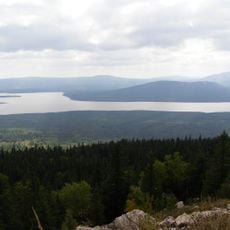
Russian geoglyph, Ancient elk geoglyph in Zyuratkul Mountains, Russia
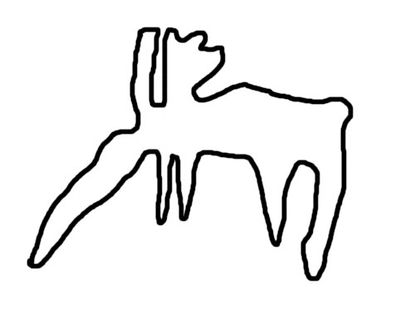
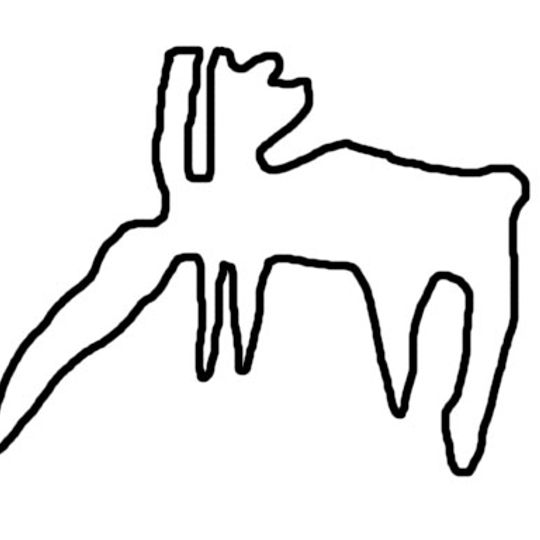
The Russian geoglyph is a stone formation on the slopes of the Zyuratkul Mountains depicting an elk. The figure stretches 275 meters diagonally and shows four legs, two antlers, and a pronounced muzzle rendered in stone.
Archaeological evidence dates the construction between 6000 and 3000 BCE, making it older than Peru's Nazca Lines. This period corresponds to the Neolithic or Chalcolithic era when early cultures began establishing settlements in the region.
The geoglyph represents early artistic expressions of ancient civilizations in the Urals region, connected to megalithic cultures that inhabited the area.
Stone walls and passages show that the structure was built in trenches dug 30 to 40 centimeters deep. Access requires hiking ability since the site sits on elevated terrain and becomes difficult to reach in poor weather.
Around 40 stone tools resembling pickaxes were found at the site, showing that ancient workers used primitive but effective techniques. These tools suggest the builders worked as an organized group planning across multiple seasons.
The community of curious travelers
AroundUs brings together thousands of curated places, local tips, and hidden gems, enriched daily by 91,395 contributors worldwide.