Kurgazak Cave, Natural monument cave in Chelyabinsk Oblast, Russia
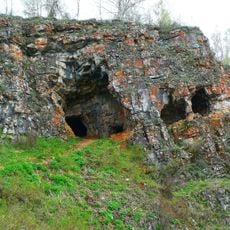
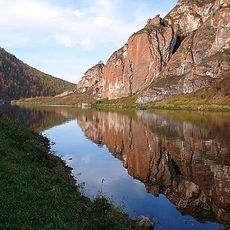
Kurgazak Cave is a protected natural monument in the Ural Mountains featuring interconnected limestone chambers and passages. The site lies close to the Ay River valley and showcases the geological character of this mountain region.
The cave was first documented by academician Peter Simon Pallas in the 18th century, establishing it as an important site for scientific study. This early exploration formed the foundation for later recognition as a protected natural monument.
The name Kurgazak comes from the Bashkir word for a dry gully or dry river, referring to the llog where the entrance sits. The cave has long drawn visitors: its former calcite formations were almost entirely destroyed by tourists, and the entrance area is now a roost for bats.
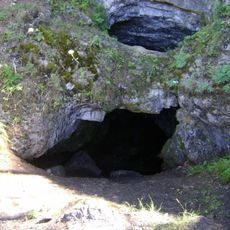
The entrance sits about 20 m up the right slope of the Kurgazak gully, roughly 150 m from the Ay River, between Mezhevoy and Alexeyevka. Inside, three large halls are linked by passages, and the floor is uneven. The cave is a regional nature monument, so the formations and the wintering bats at the entrance must be left undisturbed.
The cave holds the largest known underground glacier in Chelyabinsk Oblast. Earlier calcite formations were almost entirely destroyed by visitors, and the entrance area is a roost for bats. The name comes from the Bashkir word for a dry gully or dry river.
The community of curious travelers
AroundUs brings together thousands of curated places, local tips, and hidden gems, enriched daily by 94,842 contributors worldwide.