Lysva City Museum, Regional cultural heritage museum in Lysva, Russia.
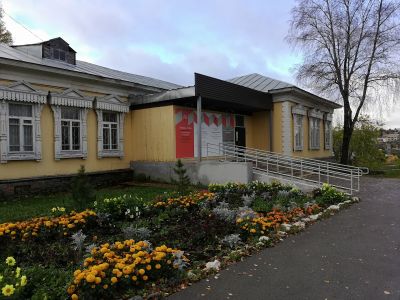
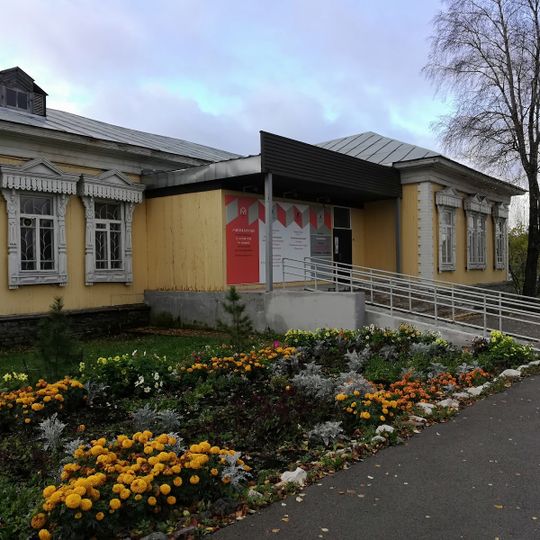
The Lysva City Museum occupies a single-storey wooden building on Mira Street in the centre of Lysva, built in 1904 as a people's house with funds from Count Pavel Petrovich Shuvalov, then owner of the Lysva works. Its halls hold over 10,000 items, including a 1913 description of the Lysva mining district and a collection of early 20th-century enamelled ware.
The museum was founded in 1957 on the initiative of Lysva veterans and public organisations. It opened in a one-storey wooden building constructed in 1904 as a people's house with funds from Count Pavel Petrovich Shuvalov, then owner of the Lysva plant. In 1960 it became the museum of the Lysva Metallurgical Plant and only in 2008 a municipal institution. In 2000 the building was designated a regional historical monument.
The museum's name comes from the Lysva mountain district, described in a 1913 document held in its collection of over 10,000 items. Displays cover 19th- and 20th-century daily life in Lysva and photographs of local heroes of the front and home front. A hall fitted out as a factory workshop shows the old machines, books and drafting board used to make helmets.
The museum stands on ulitsa Mira in the centre of Lysva, in a one-storey wooden building of 1904. Its displays occupy several halls, including one fitted out as a factory workshop with old machines, books and a drafting board, so allow time to walk through them in order.
The building was erected in 1904 as a people's house with funds from Count Pavel Petrovich Shuvalov, then owner of the Lysva factory. In 2000 it was designated a regional historical monument. Since 2009 it has housed the Helmet Museum, marking the more than 10 million soldier helmets made in Lysva during the Great Patriotic War.
The community of curious travelers
AroundUs brings together thousands of curated places, local tips, and hidden gems, enriched daily by 93,789 contributors worldwide.