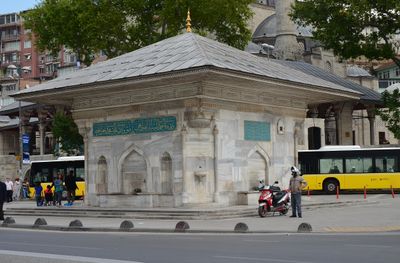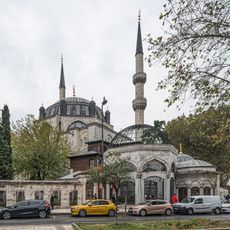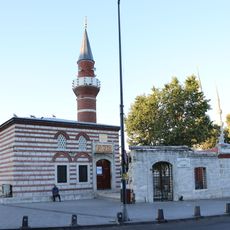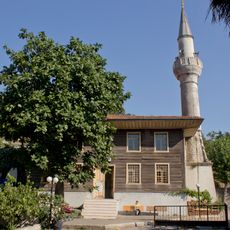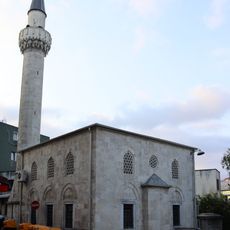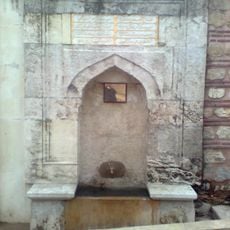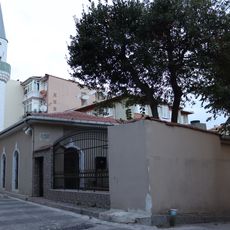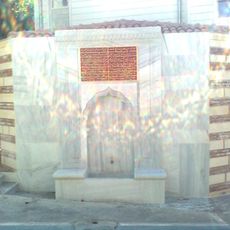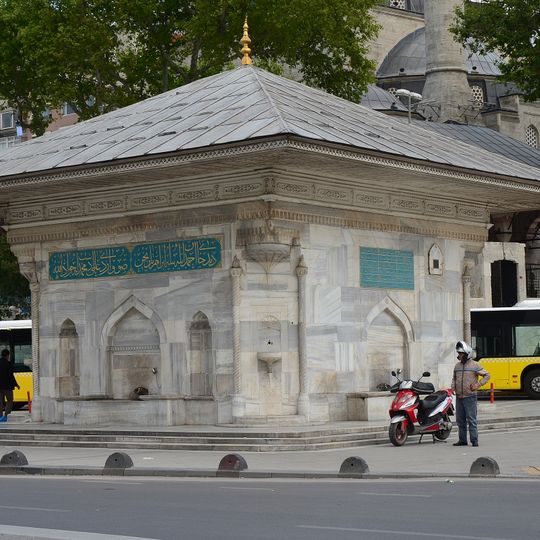
Fountain of Ahmed III, Ottoman fountain in Üsküdar, Turkey.
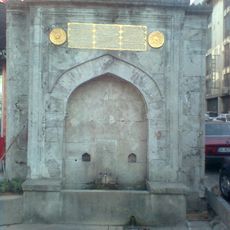
The Fountain of Ahmed III is an octagonal stone structure in Üsküdar, Istanbul, covered by a lead-topped pyramid roof over a nearly square plan. Its four wide faces and four narrower corner sections each carry carved ornaments, and faucets set beneath pointed arch openings allowed people to drink, fill containers, or perform ritual washing.
The fountain was built in 1728 along the Bosphorus waterfront to supply water to a growing neighborhood. In 1932, during a redesign of the surrounding square, it was relocated to its current position next to Mihrimah Sultan Mosque.
The inscriptions carved into the stone facades come from Ottoman poets and from the sultan himself, and they are still readable today. Looking closely at these lines gives a sense of how much thought went into turning a public water source into something also meant to be read and admired.
The fountain stands in an open square and is easy to reach on foot from the surrounding streets. Access is free at any time, and the faucets are still working, so it is possible to drink directly from them.
Although the fountain looks as if it has always stood in its current spot, it was physically moved there in the 20th century without losing its original form. This relocation shows how much the structure was valued even two centuries after it was first built.
The community of curious travelers
AroundUs brings together thousands of curated places, local tips, and hidden gems, enriched daily by 60,000 contributors worldwide.