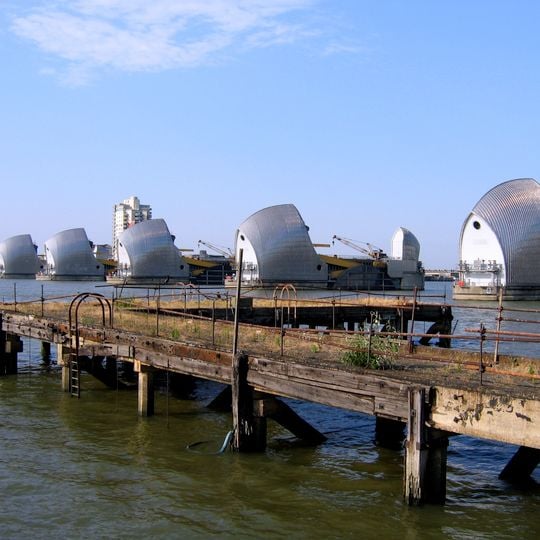
Thames Barrier, Flood barrier in Woolwich, United Kingdom
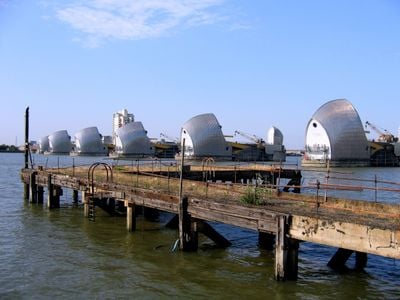
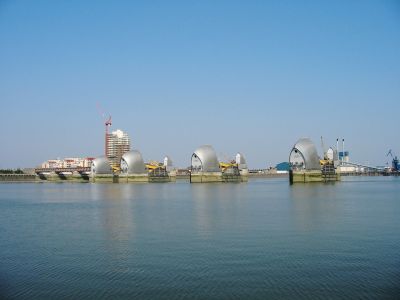
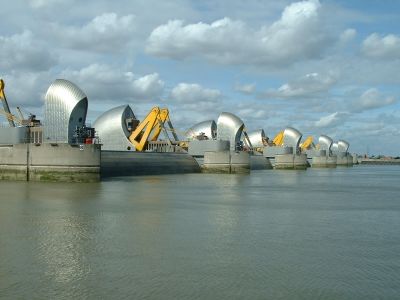
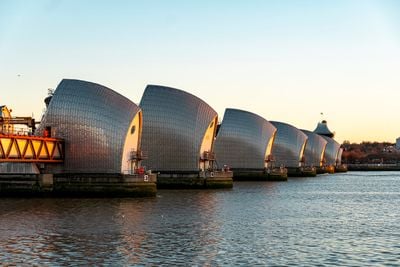
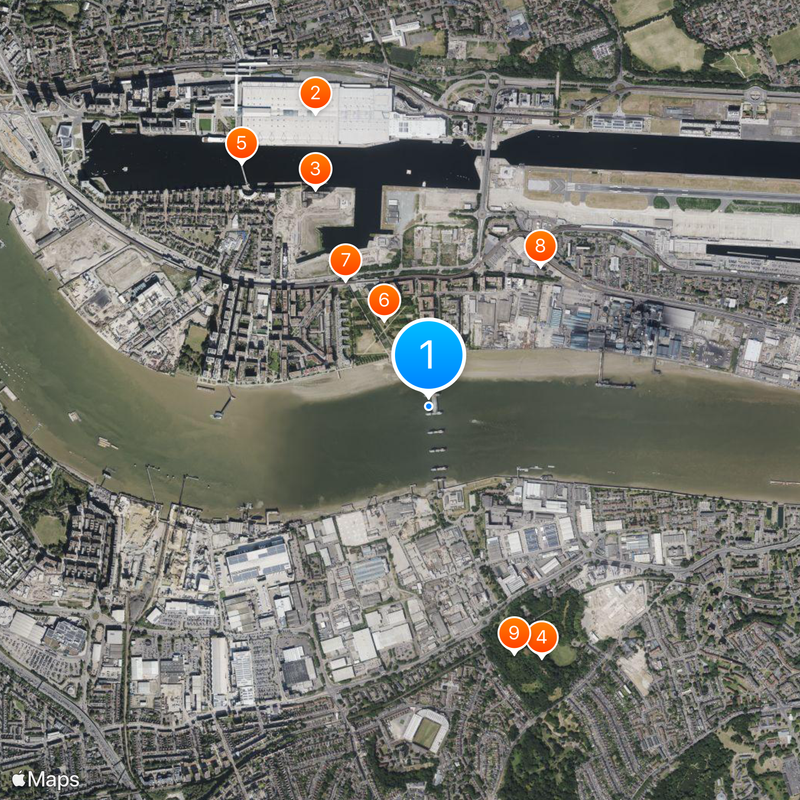
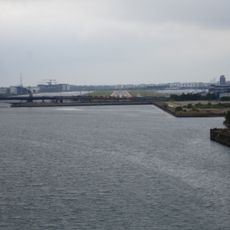
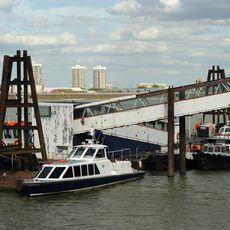
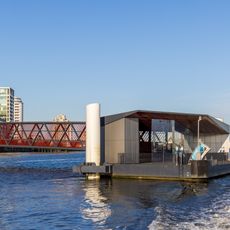
The Thames Barrier sits across the river at Woolwich and consists of ten silvery steel structures that rise like large domes from the water. The gates normally lie flat on the riverbed and allow ship traffic to pass without obstruction.
The Waverley Committee's 1954 report after the 1953 North Sea flood led to a barrier scheme, backed by Sir Hermann Bondi in 1966 and authorised by the Thames Barrier and Flood Prevention Act in 1972. Work began in 1974; all gates were first tested together on 31 October 1982, and Queen Elizabeth II officially opened the barrier on 8 May 1984.
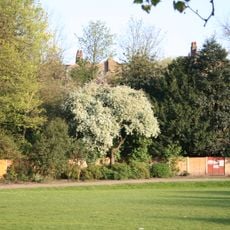
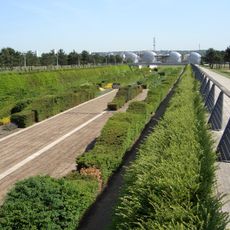
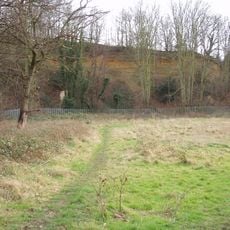
The gates were devised by Charles Draper, who modelled them on the taps of his gas cooker. The barrier is tested by closing its gates once a month, and by March 2023 it had been closed 207 times against flood threats. The Thames Barrier Park, designed by Alain Provost, opened in 2000 on the sealed remains of a dye works at Silvertown.
The barrier spans the river between Silvertown in Newham on the north bank and New Charlton in Greenwich on the south bank, about 3.2 km east of the Isle of Dogs. The Thames Barrier Park, designed by Alain Provost, opened in 2000 in Silvertown on the sealed remains of a dye works. The gates close within about 15 minutes and are test-closed once a month.
The gates close in about 15 minutes, far faster than most comparable storm surge barriers, which need several hours. The four central gates are 20.1 m high and weigh 3,700 tonnes each; the design came from Charles Draper, who modelled it on his gas cooker's taps.
The community of curious travelers
AroundUs brings together thousands of curated places, local tips, and hidden gems, enriched daily by 92,265 contributors worldwide.