Londinium, Roman settlement in City of London, Great Britain
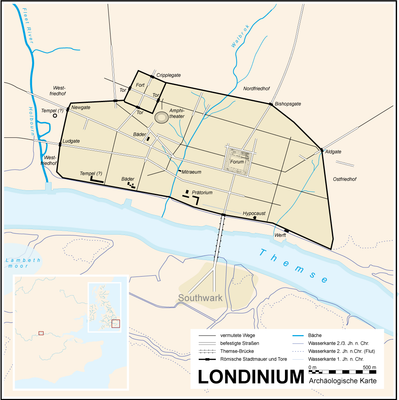
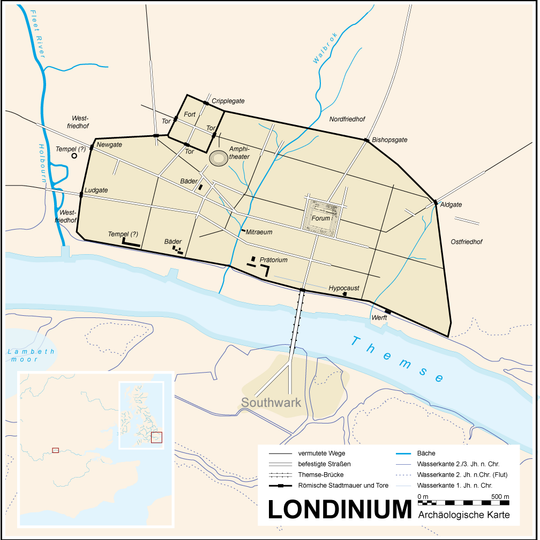
Londinium was a Roman settlement that spread across roughly 1.4 square kilometers at a Thames crossing and contained stone buildings, paved streets, and defensive walls. Remains of these structures survive throughout the modern City district, particularly near Noble Street and along what is now London Wall.
The settlement was founded around 47-50 AD following the Claudian invasion and replaced Camulodunum as the capital of Roman Britain. It quickly became the region's leading trade and administration center under Roman rule.
The settlement held multiple temples, public baths, an amphitheater for entertainment, and a marketplace-basilica for administration and trade. These buildings shaped how residents spent their time and gathered for important community activities.
Remains of walls, gates, and buildings lie scattered across the modern City and are sometimes visible in museums, building sites, or beneath current structures. The Museum of London provides the best context for understanding what once stood here and how the ancient city was organized.
A riverside defensive wall was built around 255 AD to guard against Saxon raiders, following what was then the Thames shoreline at present-day Thames Street. This wall shows how the city adapted to growing external threats as the Roman era entered its final centuries.
The community of curious travelers
AroundUs brings together thousands of curated places, local tips, and hidden gems, enriched daily by 60,000 contributors worldwide.