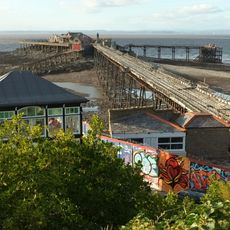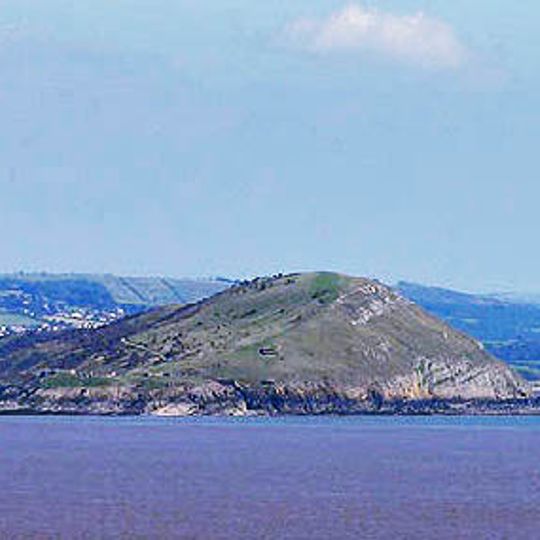
Brean Down, Limestone headland in Somerset, England.
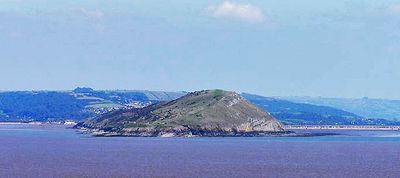
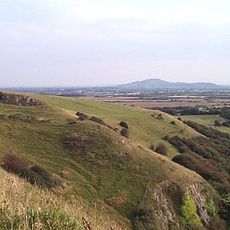
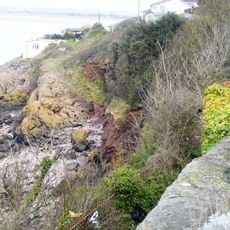
Brean Down is a limestone headland on the Somerset coast in England, jutting out into the Bristol Channel as a narrow ridge flanked by cliffs on both sides. The ridge rises gradually toward its western tip, where the land drops sharply to the sea below.
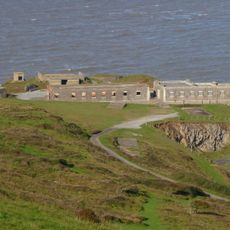
People settled and worked here as far back as the Bronze Age, and a late Roman temple still stands in partial ruin at the western end. In the 19th century, a Palmerston fort was built at the tip to guard the Severn estuary.
The name Brean Down is thought to come from Celtic roots meaning roughly 'hill' or 'headland', layered on top of each other as two languages described the same landform. Today, visitors come here mainly to walk along the ridge and watch seabirds from the cliffs.
The main access is a steep stairway at the eastern end, which is the only way up onto the ridge. Sturdy footwear is a good idea since the path is uneven in places and the wind at the tip can be strong.
In 1897, Guglielmo Marconi set up equipment here to attempt a wireless transmission across to Flat Holm island, but the experiment was cut short when a disgruntled assistant sabotaged the apparatus. The project was then moved elsewhere, leaving Brean Down with a footnote in the story of radio rather than a leading role.
The community of curious travelers
AroundUs brings together thousands of curated places, local tips, and hidden gems, enriched daily by 91,869 contributors worldwide.