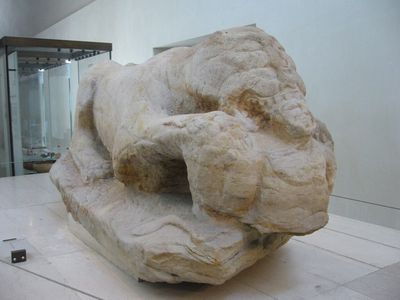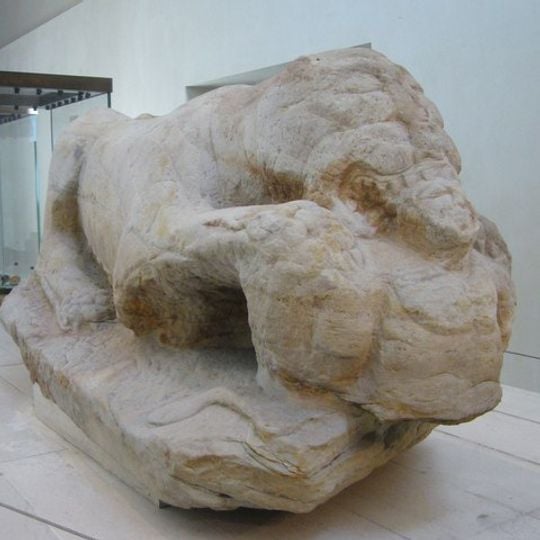
Cramond Lioness, Roman sculpture in National Museum of Scotland, Edinburgh, United Kingdom.
The Cramond Lioness is a Roman stone sculpture depicting a lioness attacking a bound prisoner, carved from a single block of white sandstone. The work measures approximately 1.5 meters in length and shows detailed carving of both the human figure and the animal.
This work dates to the Roman period and was discovered near the ancient Cramond Roman Fort at the mouth of the River Almond. A ferryman uncovered it in 1997 during a drought and the sculpture was subsequently brought to the museum.
The sculpture shows elements of Roman burial culture, with carved snakes beneath the lioness representing death and the continuation of the spirit in the afterlife.
The sculpture can be viewed in the National Museum of Scotland on the lower level and is accessible daily to visitors. The museum provides good accessibility and clear signage, making it straightforward to locate this artifact during your visit.
The stone carving shows an unusual detail: the bound prisoner is depicted upside down while the lioness attacks from behind. Such depictions of death scenes in Roman sculpture are uncommon and reveal Roman beliefs about burial rituals and the afterlife.
The community of curious travelers
AroundUs brings together thousands of curated places, local tips, and hidden gems, enriched daily by 91,660 contributors worldwide.