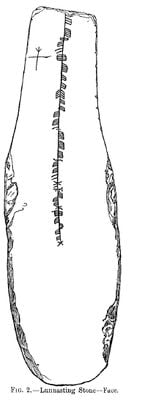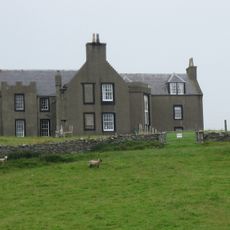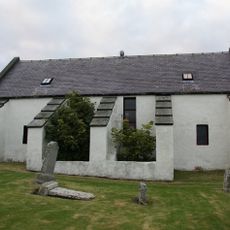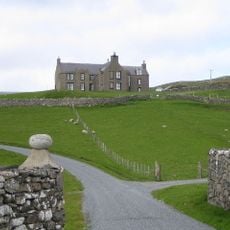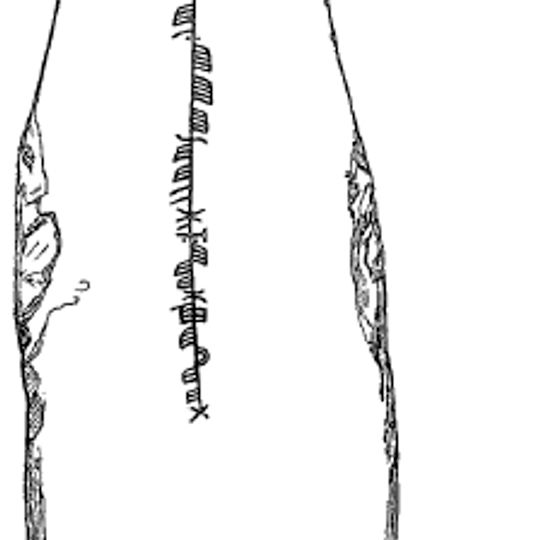
Lunnasting stone, Ogham stone in Lunnasting, Shetland Islands, United Kingdom.
The Lunnasting Stone is a slate slab with vertical inscriptions carved along its flat surface, measuring approximately 112 centimeters tall and 33 centimeters wide. The carvings include a cross and text from an early medieval writing system that scholars have studied for centuries.
A local reverend named J.C. Roger discovered the stone in 1876 while it lay buried deep in peat and later brought it to the National Museum for safekeeping. Scholars believe the inscriptions date to the eighth or ninth century, making it a record of early medieval settlement on the islands.
The stone displays a Celtic cross and script carved into its surface that tells us how people in this region combined Christian symbols with older writing traditions. Visitors can see how these two influences came together in the early medieval period on the islands.
The stone is cared for by National Museums Scotland and catalogued under the reference IB.113 in their collection. Contact the museum to learn about current display options and viewing times before planning your visit.
The carving includes the personal name Nechtan, which helps scholars understand who commissioned the stone and how the islands connected to broader networks in early medieval Scotland. This detail remains one of the most studied aspects of the monument by researchers.
The community of curious travelers
AroundUs brings together thousands of curated places, local tips, and hidden gems, enriched daily by 91,871 contributors worldwide.