Albert Bridge, Victorian bridge near Glasgow Green, Scotland
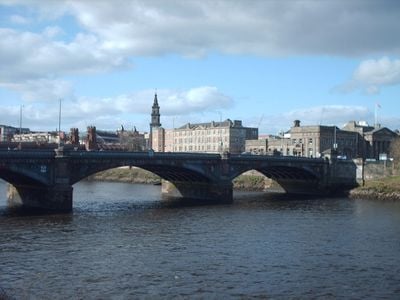
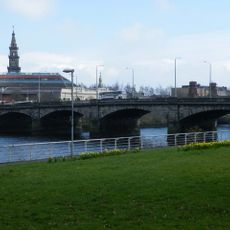
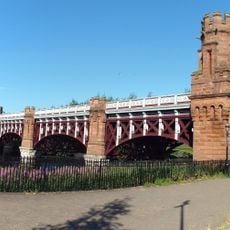
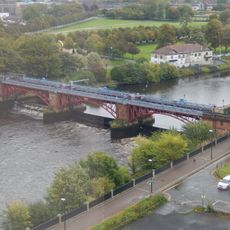
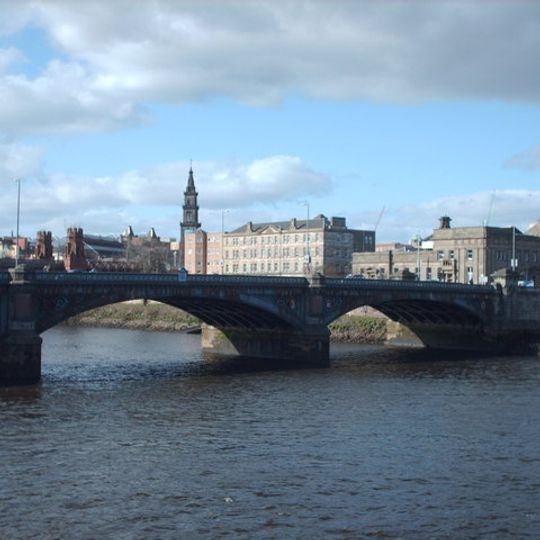
Albert Bridge is a road bridge that crosses the River Clyde with three cast-iron arches reinforced by eight ribs of riveted wrought iron. It connects central Glasgow at Saltmarket to Crown Street and is protected as a category A listed structure.
Construction took place between 1871 and 1876, replacing four earlier structures at this crossing including Robert Stevenson's Hutcheson Bridge from 1834. This new crossing became a significant infrastructure upgrade for the expanding city and its transportation needs.
The bridge displays the ancient arms of Glasgow at midspan, with granite pedestals showing sculpted heads of Queen Victoria and Prince Albert that visitors can observe. These decorative elements remain visible reminders of the era when the structure was built and created a visual link to Victorian times.
The bridge is accessible to both pedestrians and vehicles at all times, allowing free crossing of the River Clyde. You can best explore it during daylight hours to fully appreciate the cast-iron details and decorative features along the structure.
The bridge foundations extend roughly 26 meters below water level, using concrete-filled cast-iron cylinders as an innovative engineering approach for the period. This construction method was a notable technical achievement of its time and reflects the ingenuity of Victorian engineers.
The community of curious travelers
AroundUs brings together thousands of curated places, local tips, and hidden gems, enriched daily by 91,301 contributors worldwide.