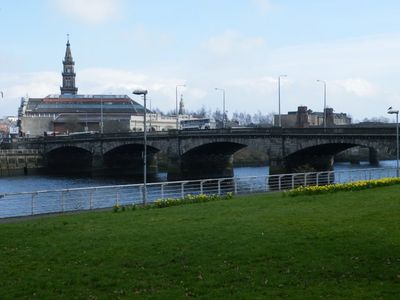
Victoria Bridge, Category A listed road bridge in Glasgow, Scotland
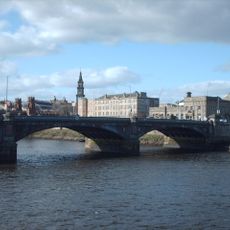
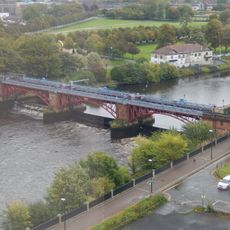
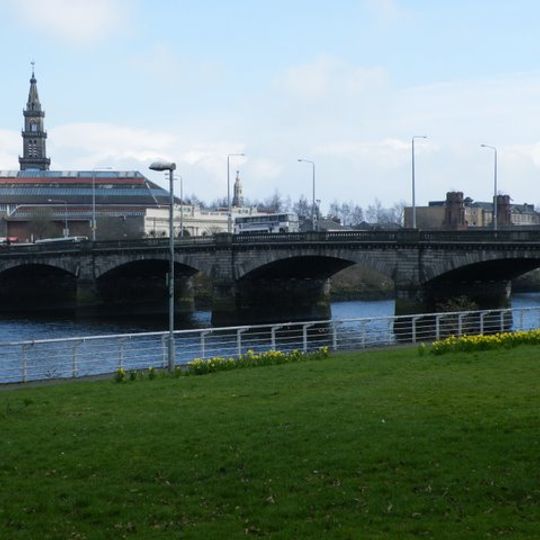
Victoria Bridge is a road crossing over the River Clyde with five segmental arches, serving as a key connection between Glasgow's different districts since the 1800s. The structure carries car traffic in one direction, with a separate lane for buses and cycles alongside the main roadway.
It was built between 1851 and 1854, replacing an earlier bridge that had stood at this site since the 1300s and had been Glasgow's primary river crossing for centuries. The new construction allowed the city to handle its rapidly expanding traffic and expansion across the Clyde.
The bridge connects the commercial core with older neighborhoods south of the river, serving pedestrians, cyclists, and buses daily. It remains an essential piece of Glasgow's connection to the Clyde and how residents navigate the city.
Pedestrians and cyclists can cross using the designated areas on the bridge, which become quite busy during rush hours as many people use it daily. It is easier to navigate this crossing when you have time to spare rather than during peak traffic periods.
The bridge's foundations rest on timber piles that were steam-driven deep beneath the riverbed, an early engineering feat for stability. This hidden construction below the water surface reveals how Victorian engineers solved the problem of solid foundations in river crossings.
The community of curious travelers
AroundUs brings together thousands of curated places, local tips, and hidden gems, enriched daily by 90,852 contributors worldwide.