Tahquamenon Falls, Waterfall system in Upper Peninsula, Michigan, United States.
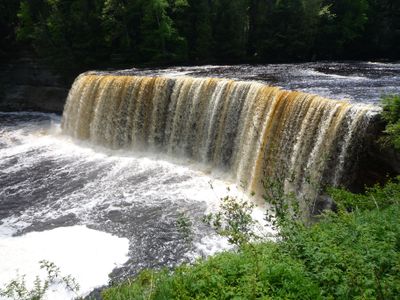
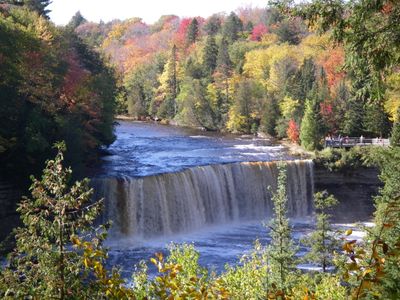
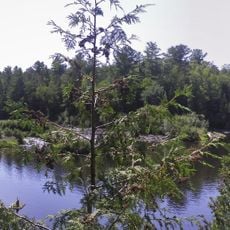
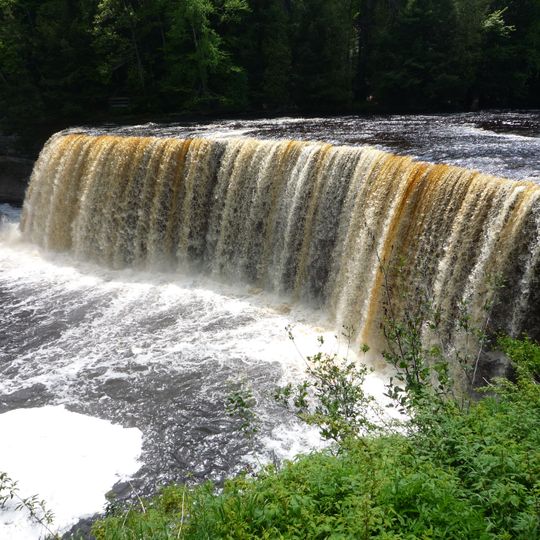
Tahquamenon Falls is a waterfall in northern Michigan that divides into two sections flowing through dense forest. The upper section drops roughly 15 meters (50 feet), while the lower forms several shallower steps that slide over smooth rock.
The Ojibwe lived in this area for a long time before European settlers arrived in the nineteenth century. The site was later protected as a state park to preserve the falls and the surrounding wilderness.
The name comes from the Ojibwe language and means discharge or river, describing how the water flows here. Visitors today see a landscape framed by cedar and hemlock trees, its natural character protected for generations.
Access to the upper section is easier and has paved paths, while the lower requires more walking. The best time to visit is in spring and autumn, when the water flows stronger or the trees change color.
The water picks up tannins from surrounding swamps, which makes it appear brown and form white foam as it tumbles over the rocks. This natural tint remains visible throughout the year and sets it apart from clear mountain streams.
The community of curious travelers
AroundUs brings together thousands of curated places, local tips, and hidden gems, enriched daily by 91,692 contributors worldwide.