Forks of Cypress, human settlement in Alabama, United States of America
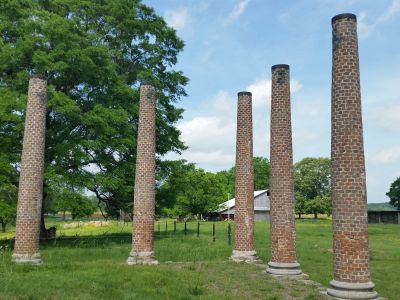
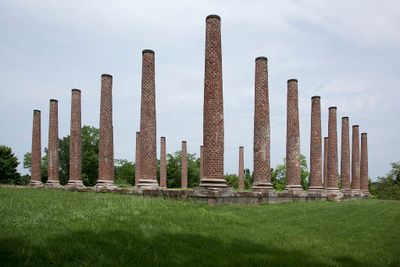
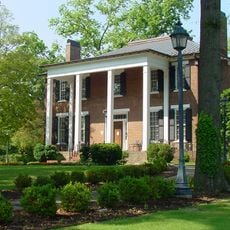
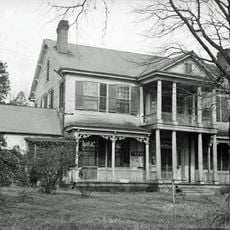
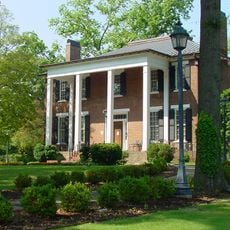
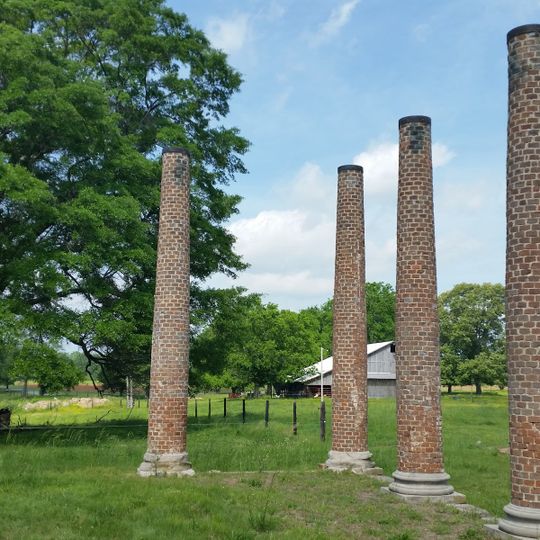
Forks of Cypress is a plantation site in Alabama featuring the remains of a Greek Revival house built in 1830, designed by the prominent architect William Nichols. The original structure was encircled by 24 Ionic columns made from a mixture of brick, plaster, and other materials, and though the main house burned in 1966, the standing columns remain visible on the property.
James Jackson, an Irish immigrant, had the house built in 1830 for himself and his wife Sally Moore Jackson, becoming known for breeding racehorses on the plantation. Following his death in 1840, the estate passed through several owners, and in 1966, lightning struck the main house and destroyed it, leaving only the columns standing.
The name comes from two creeks that meet near the house: Big Cypress Creek and Little Cypress Creek, which defined the landscape for the community. The site was a working cotton plantation where enslaved people labored, and the land reflects the complex history of early 19th-century southern agricultural life.
The site remains on private land near Florence, Alabama, and the standing columns can sometimes be viewed from nearby roads, but you should seek permission before entering the property. The remains are best visited during daylight hours when you can walk through the grounds and see the brick columns and other surviving structures.
The 24 columns were made on-site from an unusual mixture of brick, plaster, gravel, sand, molasses, and horsehair, a distinctive construction method rarely seen elsewhere in Alabama. In 1982, a local bank recreated portions of the house for one of its own buildings, giving visitors a sense of the original home's appearance after the 1966 fire destroyed the actual structure.
The community of curious travelers
AroundUs brings together thousands of curated places, local tips, and hidden gems, enriched daily by 91,620 contributors worldwide.