Hanna–Honeycomb House, Architectural residence in Palo Alto, United States.
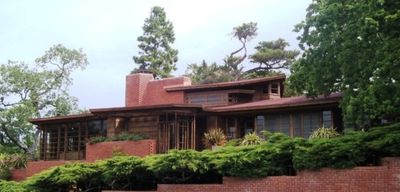
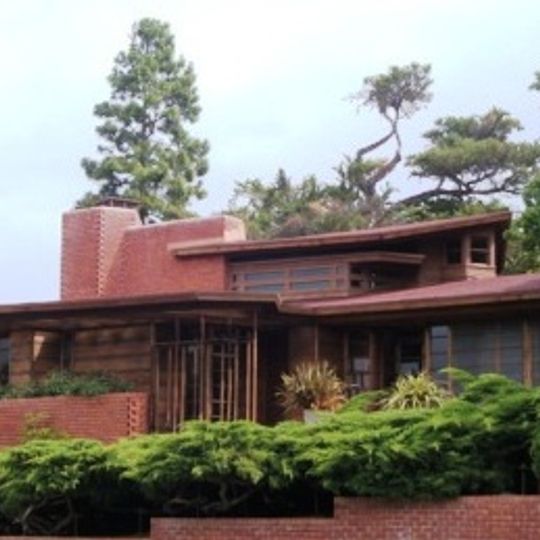
The Hanna-Honeycomb House is a residence in Palo Alto designed by Frank Lloyd Wright featuring a distinctive floor plan based on hexagonal geometry. The structure employs native redwood, local brick, and expansive glass walls to create interior spaces that flow together without sharp corners.
Wright designed and built this residence in 1936 as his first residential project in the San Francisco Bay Area. The house emerged during a period when the architect was exploring geometric forms as a way to organize living spaces more naturally.
The home represents Wright's belief that houses should grow naturally from their surroundings, a philosophy that shaped how architects thought about residential design. Visitors can see this idea reflected in how the building sits on the land and opens to the outdoors.
The property is managed by Stanford University and welcomes visitors through guided tours that explore the innovative construction methods and design. Tours are the best way to understand how the spaces work, as the geometry and flow of the building reveal themselves gradually as you move through the rooms.
The house contains no right angles anywhere in its floor plan, using 120-degree angles throughout to create flowing interior spaces in unexpected ways. This geometric choice was experimental for its time and shows how Wright used mathematics to reshape how people move and live inside the building.
The community of curious travelers
AroundUs brings together thousands of curated places, local tips, and hidden gems, enriched daily by 91,612 contributors worldwide.