Hopkinton Dam and Spillway, Historic dam and spillway in Middlesex County, Massachusetts
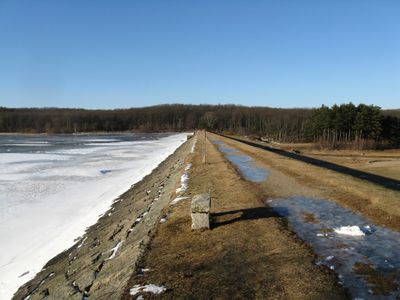
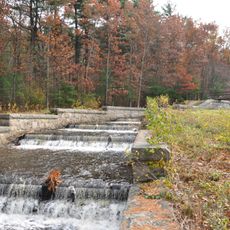
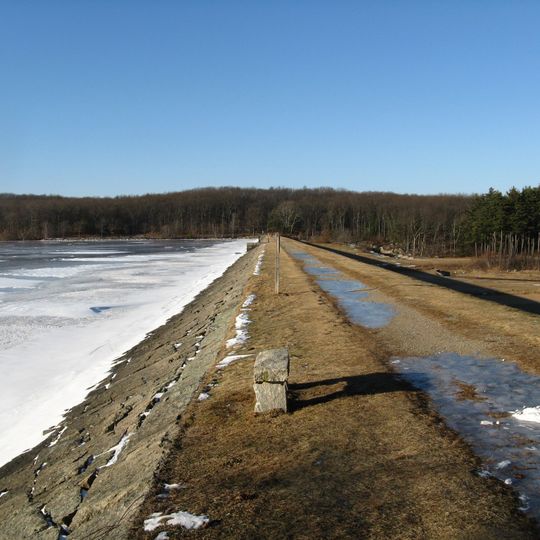
The Hopkinton Dam and Spillway is an embankment dam in Massachusetts built between 1891 and 1894, creating a long, narrow reservoir for water storage. It features a concrete core with earthen banks reinforced by stone rip-rap, and a spillway at the north end with granite-lined steps running about 650 feet to manage water flow safely during high water levels.
The dam was constructed between 1891 and 1894 as part of a water supply project for Boston, drawing from the Sudbury River watershed. Its addition to the National Register of Historic Places in 1990 recognized its significance as an example of late 19th-century engineering focused on serving growing urban areas with reliable water sources.
The name comes from the town of Hopkinton nearby, which the dam serves as a water supply infrastructure. Visitors and locals see it as a quiet landmark where the natural landscape and human engineering meet, often stopping to observe the water flow and surrounding forest.
The dam is located within Hopkinton State Park and remains accessible year-round, though water levels vary with seasons. Walking along the trails near the dam provides the best views of the structure and surrounding forest, making it easy to see both the spillway steps and the reinforced banks from different angles.
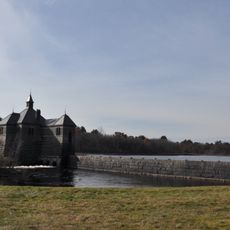
Unlike other dams in the same water supply system, this one was built without gatehouses above the spillway chambers, suggesting that water control could be managed through the stepped spillway design alone. This simpler approach reflects a practical engineering choice that proved effective from the beginning.
The community of curious travelers
AroundUs brings together thousands of curated places, local tips, and hidden gems, enriched daily by 92,019 contributors worldwide.