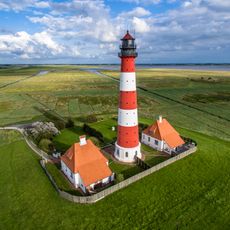
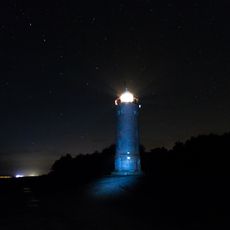
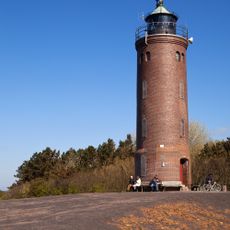
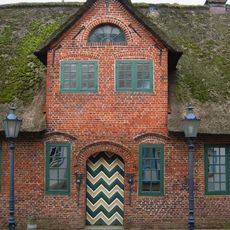
Wogemannsburg, lighthouse in Westerhever, Schleswig-Holstein, Germany
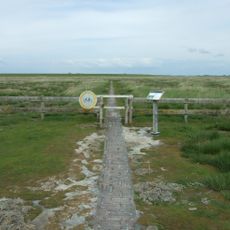
Wogemannsburg is a heritage site on the peninsula of Eiderstedt in northern Germany where a small fortress once stood on raised ground. Only low earthen mounds remain visible today, while the castle's stones were incorporated into the nearby church and pastor's house.
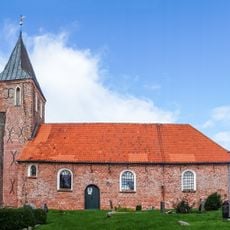
The castle was built in the 14th century by local sea raiders and served as their fortress until it was attacked and destroyed in 1370. Sixty Wogemänner were executed during this conquest, and the castle ruins were later used as building material for local church structures.
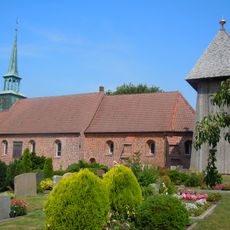
The site takes its name from the Wogemänner, medieval pirates who built their fortress here and became part of local memory. Today the location shows how the community repurposed stones from the destroyed castle to construct the church and pastor's house, weaving their history into the landscape.
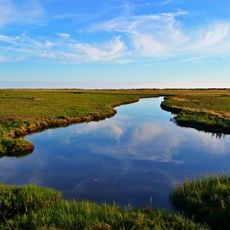
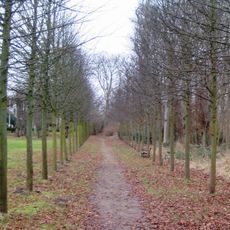
The site sits on raised ground (a warft) that protects against flooding and is accessible by simple walking paths. Visitors should wear sturdy footwear since the ground is uneven and the area remains exposed to weather.
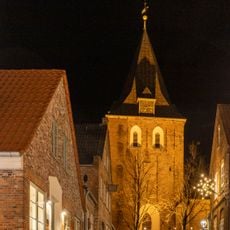
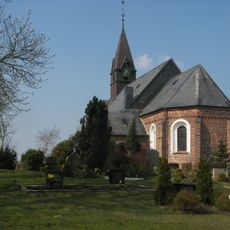
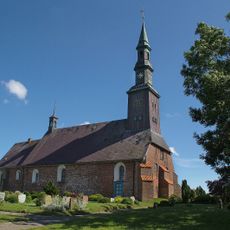
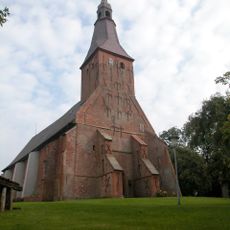
The stones from the destroyed castle were not wasted but carefully reused to build the old church tower and pastor's house. This 1370 tower remains the oldest church tower in the entire region and stands today as a stone memorial to this practical resourcefulness.
The community of curious travelers
AroundUs brings together thousands of curated places, local tips, and hidden gems, enriched daily by 60,000 contributors worldwide.