Howick house, Archaeological site in Northumberland, England.
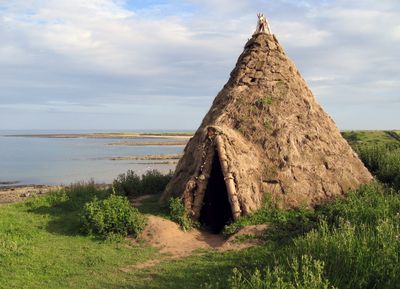
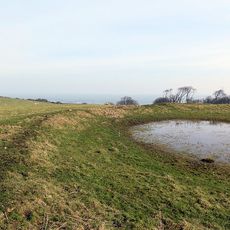
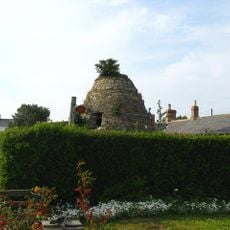
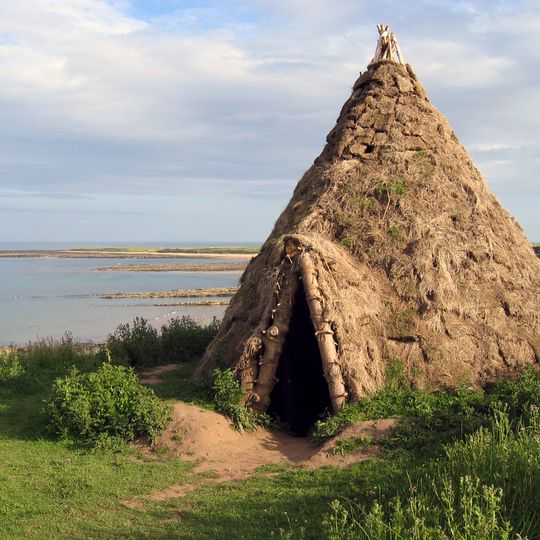
Howick House is a Mesolithic round dwelling with deep post holes, multiple hearths, and clear evidence of permanent occupation near the Northumberland coast. Two reconstructions display the building technique used: birch poles formed a cone shape, with pine logs providing the structural framework.
The site originated around 7800 BC, ranking among the earliest known permanent settlements from Britain's Stone Age. Examination of charred hazelnut shells indicates the location was continuously occupied for roughly 100 years.
The residents took advantage of their coastal setting by fishing and gathering shellfish, while also collecting hazelnuts and berries from nearby areas. This combination of sea and land resources allowed them to remain in one place rather than moving constantly.
The two reconstructions on-site help visitors understand how the original structure looked and how it was built. Wear good footwear, as the coastal location can be windy and the ground is uneven in places.
Analysis of over 30 charred hazelnut shells using radiocarbon dating provided unusually detailed information about the site's settlement history. This method allowed archaeologists to build a far more precise picture of human occupation than typically possible.
The community of curious travelers
AroundUs brings together thousands of curated places, local tips, and hidden gems, enriched daily by 91,860 contributors worldwide.