Robin Hood Gardens, Brutalist housing estate in Poplar, London, Great Britain
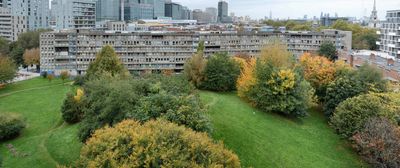
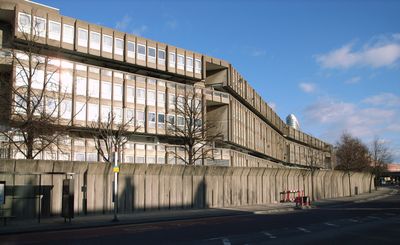
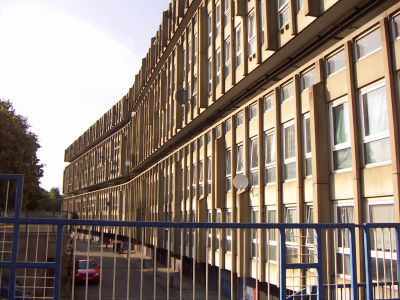
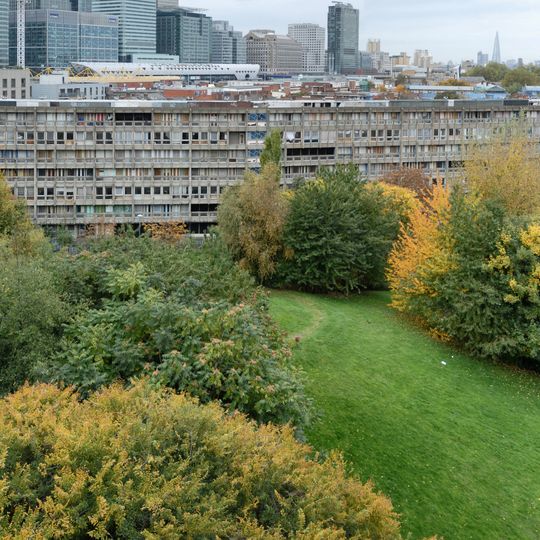
Robin Hood Gardens consists of two long, curved concrete blocks arranged around a central green space, linked by elevated walkways. The development includes housing in different sizes, from compact units to larger two-story maisonettes.
Alison and Peter Smithson designed the estate in the 1960s in response to the postwar housing shortage in East London. Completed in 1972, it showed how modern urban design could address both community needs and individual privacy.
The estate represents a specific vision of community living in the postwar period. Today, people recognize in it a reflection of how architects sought to balance private homes with shared neighborhood spaces.
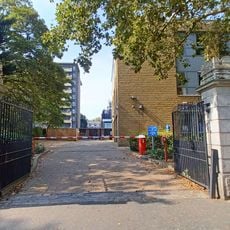
The two blocks are clearly visible from the street and can be viewed from public pavements around the site. While the central green area is only partly visible from street level, the surrounding footpaths give a good sense of the overall layout and design.
The architects embedded concrete fins along the facades to protect the flats from traffic noise. These elements give the building a distinctive appearance and represent a rare use of acoustic design in housing architecture of that period.
The community of curious travelers
AroundUs brings together thousands of curated places, local tips, and hidden gems, enriched daily by 90,902 contributors worldwide.