Mausoleum of Theodoric, Historical civil building museum near Ravenna, Italy
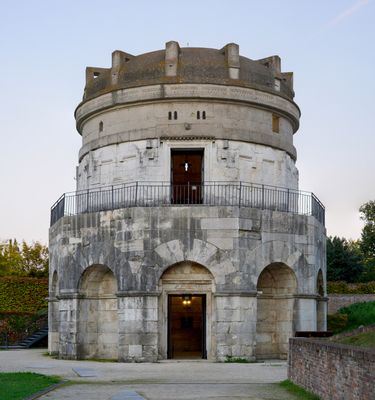
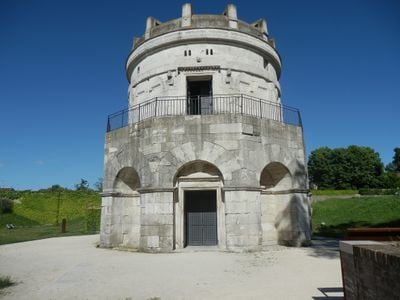
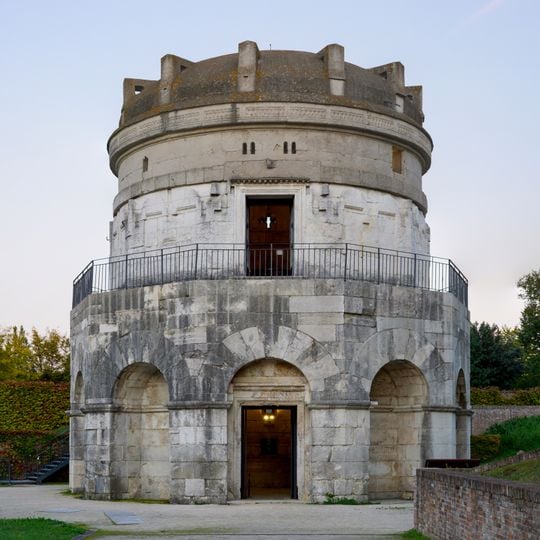
The Mausoleum of Theodoric is a burial monument made of Istrian stone in Ravenna, Italy, built from two ten-sided levels. The upper chamber is covered by a single massive stone slab that bears twelve spurs and spans the space without mortar or supports.
The Ostrogothic king Theodoric the Great commissioned this tomb in 520, shortly before his death in 526. After the Byzantine conquest in 540, his remains were removed and the building was later used as a chapel.
The six-pointed star formed by spurs around the dome carries the names of apostles, following an Ostrogothic tradition where Christian symbols merge with Germanic ornamentation. Visitors can recognize the pierced arcades that connect Roman construction methods with barbarian patterns.
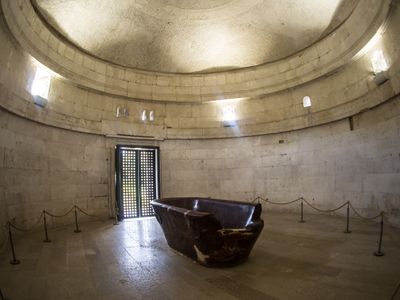
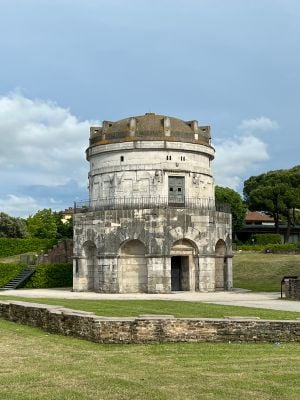
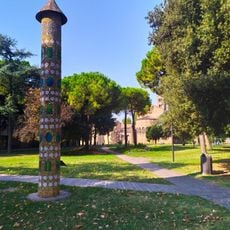
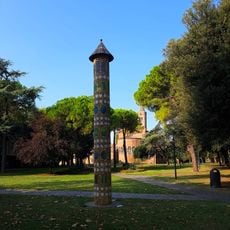
Access is through a small park that surrounds the structure and makes it easy to walk around the exterior. The interior consists of two levels connected by a narrow staircase, with the upper chamber holding the empty porphyry sarcophagus.
The entire roofing slab was transported from a quarry in Istria across the Adriatic to Ravenna, a logistical feat that still raises questions today. No one knows exactly how workers lifted the massive block into place without a crane or heavy equipment.
The community of curious travelers
AroundUs brings together thousands of curated places, local tips, and hidden gems, enriched daily by 60,000 contributors worldwide.