Firefly shrimp of Jūrokushima, Marine habitat in Okayama, Japan.
The waters around Jūrokushima form a marine habitat where tiny crustaceans produce blue light through a natural bacterial relationship. These small organisms create glowing displays visible in the dark waters throughout the coastal region.
Scientists first documented the presence of these bioluminescent crustaceans in Jūrokushima's coastal waters during the early 20th century. Knowledge of this phenomenon grew steadily over the decades as research continued to reveal more about their behavior.
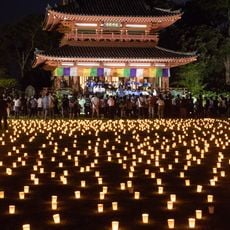
Local people have long incorporated these glowing creatures into their traditions and mark special occasions by gathering to watch the light displays. The practice connects visitors with generations of observers who came to witness the same natural phenomenon.
The best season for viewing falls between February and July, when these organisms are most active and their light production peaks. Darker moon phases offer better visibility of the glowing displays from the shore.
These tiny crustaceans have a remarkably brief glowing period that lasts about 24 hours before they die, making each sighting a fleeting encounter. This ephemeral quality gives the phenomenon an unpredictable and temporal character that varies night to night.
The community of curious travelers
AroundUs brings together thousands of curated places, local tips, and hidden gems, enriched daily by 91,378 contributors worldwide.