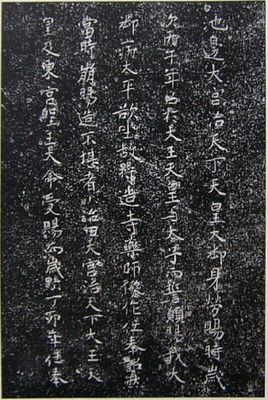
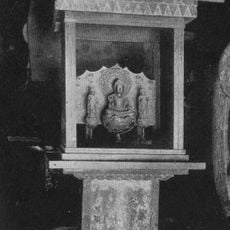
Inscription on the halo of the statue of Yakushi Nyorai, Buddhist inscription at Horyu-ji Temple, Ikaruga, Japan
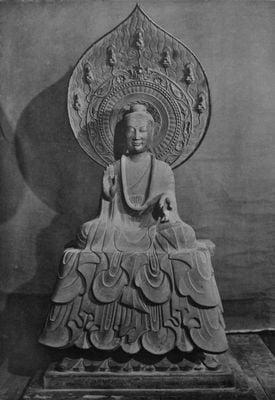
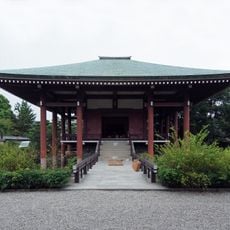
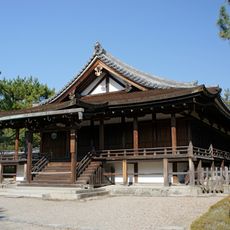
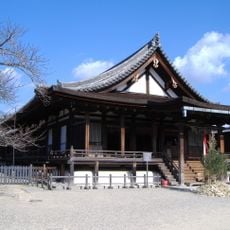
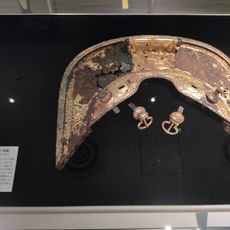
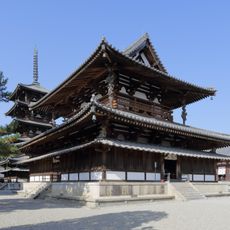
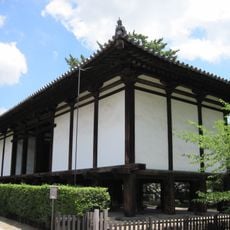
The Statue of Yakushi Nyorai is a copper Buddha statue housed in the Golden Hall of Hōryū-ji Temple, with an engraved inscription decorating the rear of its halo. The inscription spans five vertical lines containing 90 characters in total.
The inscription was created in 607 and records Emperor Yomei's vow to build a temple and commission a Buddha statue for his recovery. This early record stands as one of the oldest surviving documents that document religious practice in Japanese history.
The inscription shows how Japanese writing developed by mixing Chinese characters with local grammar patterns in creative ways. The arrangement of these characters reveals the artistic choices that craftspeople of this era valued.
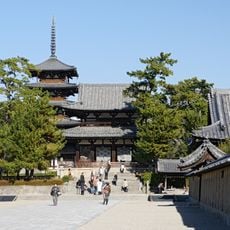
The artwork is located on the eastern side of the Golden Hall and can be seen from nearby due to its placement on the Buddha's halo. Visitors should allow time to observe the fine details of the engraved characters closely, as they are difficult to make out from a distance.
The engraved characters lean noticeably to the left, particularly characters like 'ten' and 'dai', giving the text a distinctive tilted appearance. This directional tilt creates a dynamic visual quality that sets this inscription apart from other temple texts.
The community of curious travelers
AroundUs brings together thousands of curated places, local tips, and hidden gems, enriched daily by 60,000 contributors worldwide.