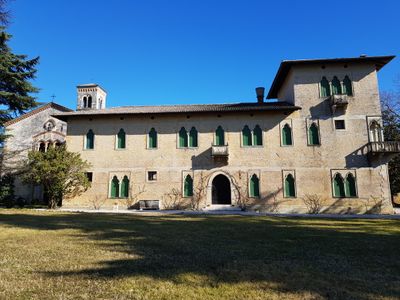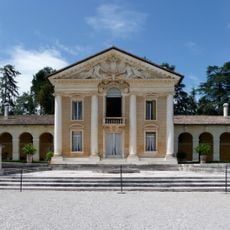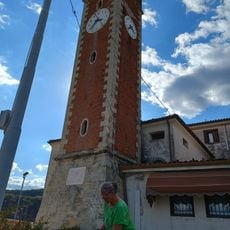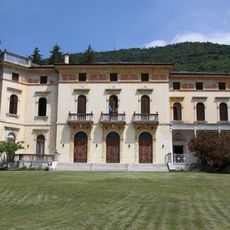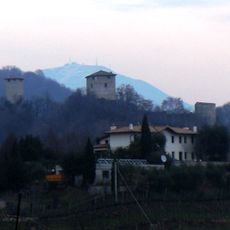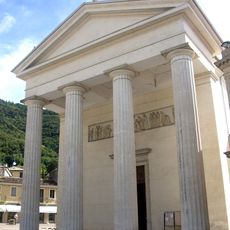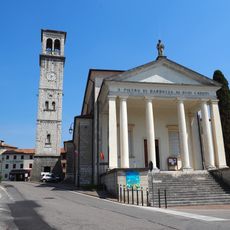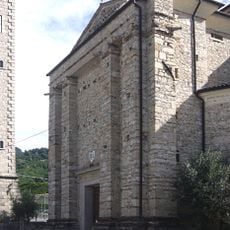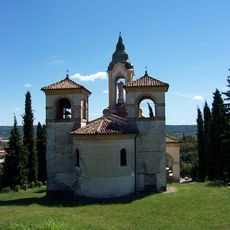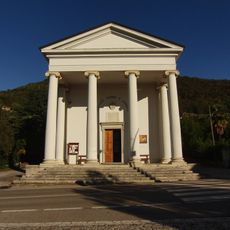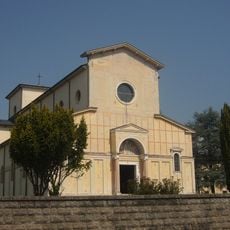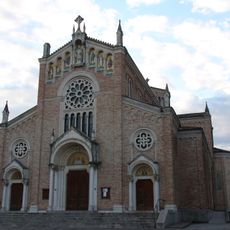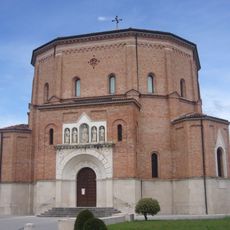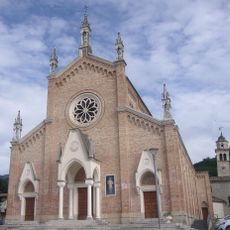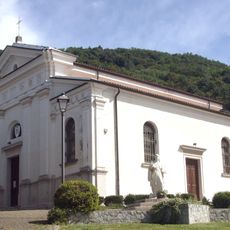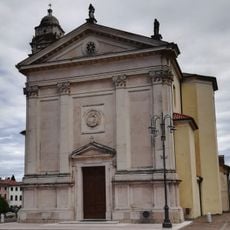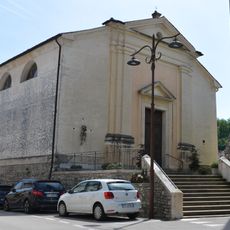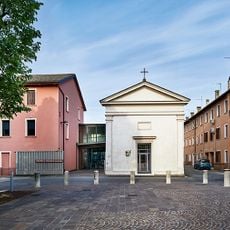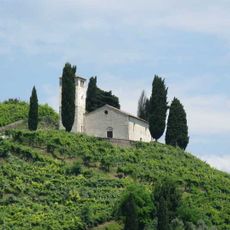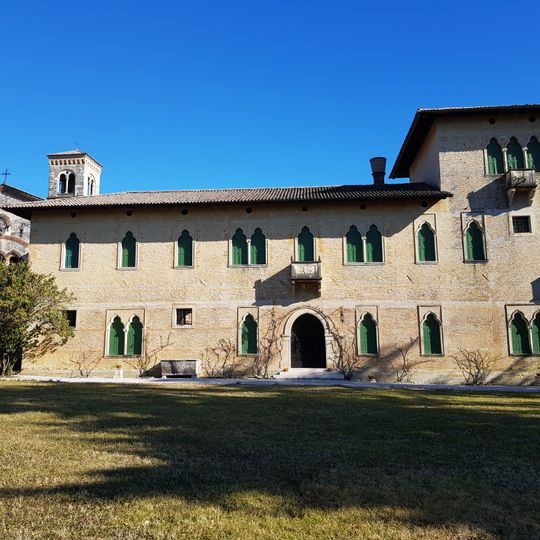
Abbazia di Santa Bona, Benedictine abbey in Vidor, Italy.
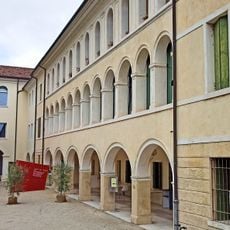
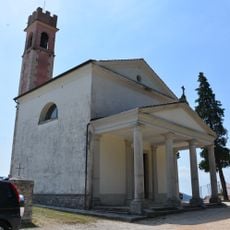
The Benedictine monastery Santa Bona sits along the Piave River and features Romanesque church architecture paired with a Gothic cloister that contains distinctive stone columns and carved capitals. The buildings span different construction periods and show how the site evolved through the medieval and early modern eras.
The abbey was established in the early 1100s through a land donation to a Pomposa monastery abbot. The Benedictine community then became one of the most influential religious and economic centers in the northern Adriatic region.
The monastery shaped the local landscape through monastic farming practices that transformed how the territory was used. Visitors can observe how the surrounding land reflects the monks' influence on agriculture and settlement patterns.
Entry requires advance reservation and is typically arranged through guided tours. Access is available at set times, and visitors should check ahead since not all areas are open daily.
Two medieval frescoes remain visible in the church choir, depicting religious figures from the monastery's history. These wall paintings offer a rare window into the artistic traditions that flourished within this community.
The community of curious travelers
AroundUs brings together thousands of curated places, local tips, and hidden gems, enriched daily by 92,368 contributors worldwide.