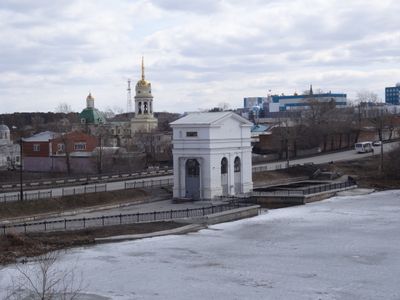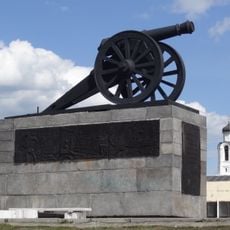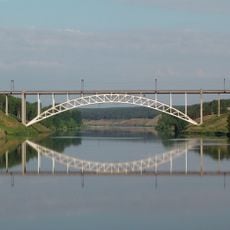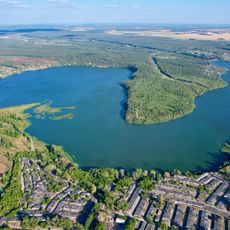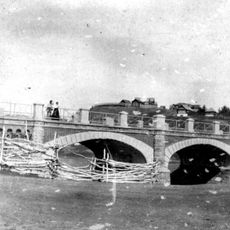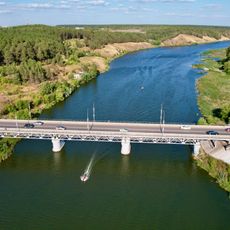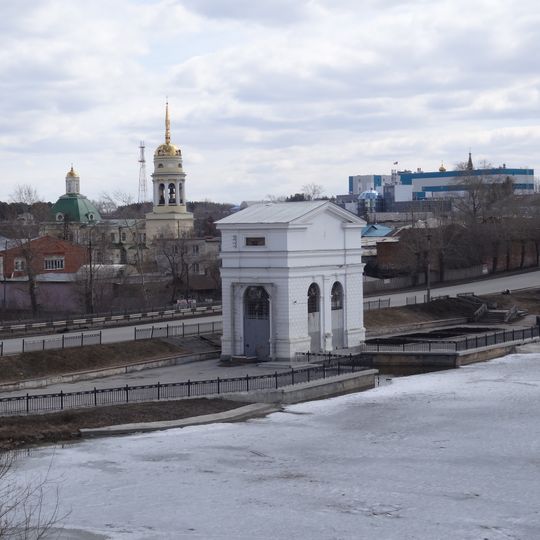
Dam on the Kamenka river, Regional heritage dam in Kamensk-Uralsky, Russia
The dam on the Kamenka is a stone and earth structure that spans approximately 117 meters and reaches about 31 meters wide at its crest. It combines heavy masonry with earth fill to control river flow and direct water toward the industrial mills located downstream.
Construction began in 1700 under the direction of Ivan Astrakhantsev and master builder Ermolai Neklyudov, following orders from Peter the Great. This early investment in harnessing water power marked the transition toward organized industry in the Urals.
The dam served as the foundation for early ironworks in the region and drew workers from across surrounding territories. Today, visitors can observe traces of how this structure shaped local settlement and daily life during the industrial boom.
The dam is most easily reached by bus lines 2 or 8 heading to the Local History Museum stop, then a short walk of about 350 meters on foot. The best visiting conditions occur during dry weather, when paths around the structure are clearly accessible and safe to explore.
The right bank still displays its original supporting wall built from rubble stone without modern mortar, constructed entirely by hand using 18th-century techniques. This preserved section reveals how builders stacked materials directly together to create a stable barrier against water pressure.
The community of curious travelers
AroundUs brings together thousands of curated places, local tips, and hidden gems, enriched daily by 92,036 contributors worldwide.