Columbia University sundial, Historic sundial at Columbia University campus, United States.
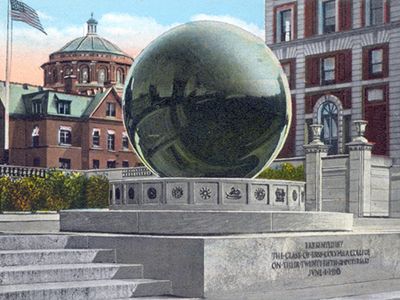
The Columbia University sundial is a stone platform at the center of College Walk, fitted with brass inserts that mark specific hours and dates throughout the year. Sunlight falls on the platform and casts a shadow that indicates the time of day.
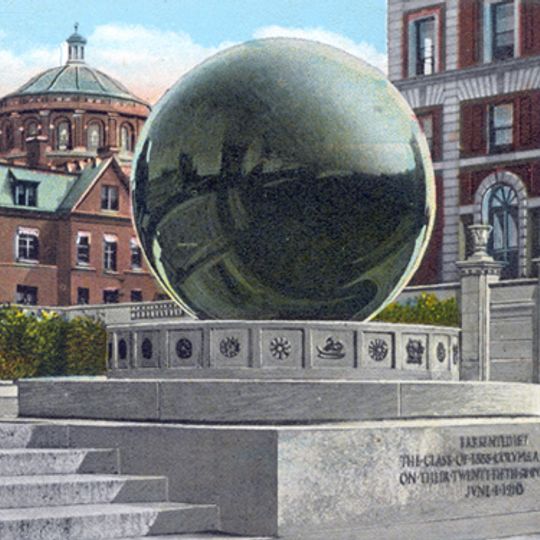
The sundial was designed in 1914 by astronomy professor Harold Jacoby together with the architectural firm McKim, Mead & White. The original shadow-casting element was a massive granite sphere weighing around 16 tons (about 14.5 metric tons).
The platform has served as a gathering spot for students since the 1960s, hosting protests and commemorative events over the decades. Visitors walking through campus today will often find small groups meeting or pausing here.
The shadow aligns most accurately with the brass plates around noon, so that is the best time to see the mechanism in action. A clear, sunny day makes it much easier to follow how the whole thing works.
The pedestal carries a Latin inscription reading 'Horam Expecta Veniet', which translates roughly as 'Wait for the hour, it will come'. The original granite sphere that once cast the shadow now sits in a field near Ann Arbor, Michigan.
The community of curious travelers
AroundUs brings together thousands of curated places, local tips, and hidden gems, enriched daily by 91,544 contributors worldwide.