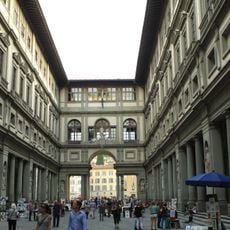
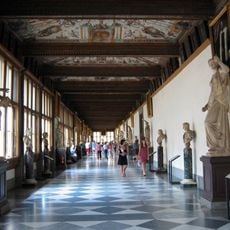
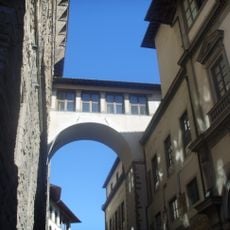
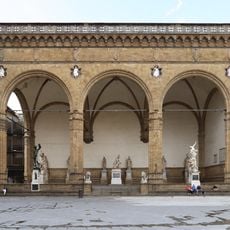
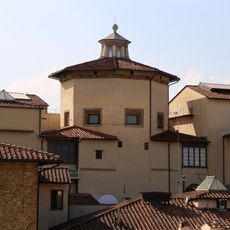
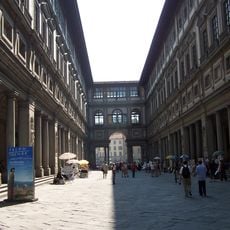
Loggiato of the Uffizi, Renaissance loggia at Uffizi Gallery in Florence, Italy
The Loggiato is a covered corridor featuring a continuous row of Doric columns supporting vaulted ceilings that create an elegant passageway along the gallery's edge. The structure frames views of the Arno and connects multiple museum entrances together.
Giorgio Vasari designed this structure in 1560 as part of the Uffizi complex, which initially served as administrative offices for Florence's magistrates. The construction reflects the Renaissance vision of combining practical space with artistic design.
The loggia houses 28 marble statues of important Tuscan figures like artists and scientists in niches between the columns since the 1840s. These sculptures show how the city honored the minds that shaped the region.
The corridor offers shelter from rain and sun while moving between different areas of the museum. The wide passage is easy to walk through and lets visitors enjoy the surroundings as they move along.
The design uses straight architraves instead of the rounded arches more common in Florence, making it stand out from other buildings in the city. This choice made it a notable experiment in how the local architecture could evolve.
The community of curious travelers
AroundUs brings together thousands of curated places, local tips, and hidden gems, enriched daily by 92,229 contributors worldwide.