"Miracle" tile, Tourist attraction in Vilnius, Lithuania
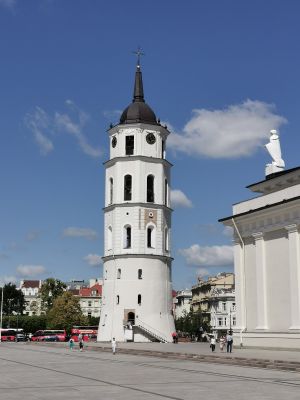
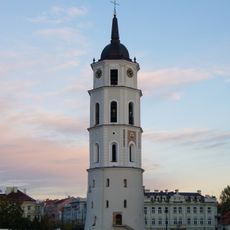
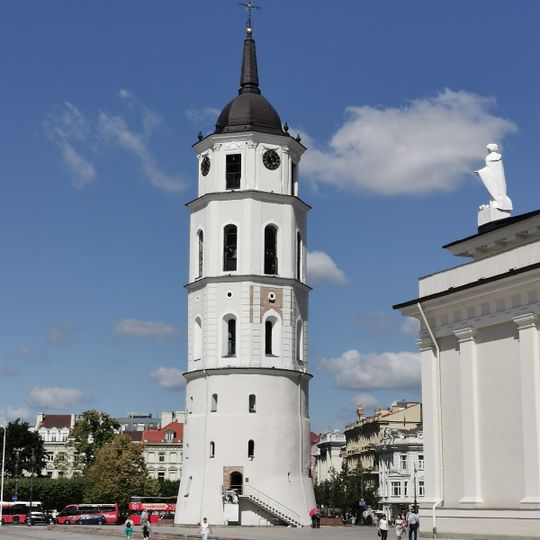
The "Miracle" tile, known in Lithuanian as "Stebuklas," is a small decorative floor tile set into the pavement of Cathedral Square in Vilnius, Lithuania. It sits close to the bell tower and features the word "Stebuklas" rendered in mosaic.
The tile marks the southern endpoint of the Baltic Chain formed in 1989, when hundreds of thousands of people joined hands from Vilnius to Tallinn to protest Soviet rule. Artist Gitenis Umbrasas later created it as a lasting marker at this spot.
The tile bears the Lithuanian word "Stebuklas," meaning "miracle," which visitors can read even without knowing the language. Many people step onto it, close their eyes, and turn clockwise to make a wish, a habit that spread entirely on its own without any official instruction.
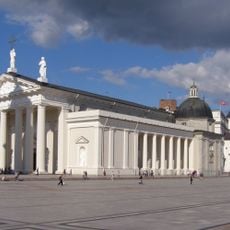
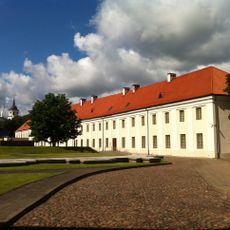
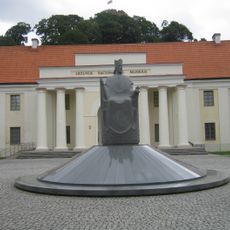
Cathedral Square sits in the heart of Vilnius old town and is easy to reach on foot from most central points. The tile is set flush with the ground and open to everyone, though foot traffic can make it easy to miss, so it helps to look down near the bell tower.
Although the tile is now known as a wishing spot, its original purpose was purely historical: to mark the exact point where the 1989 human chain ended. The connection to wish-making grew from visitors themselves, not from the artist's intention.
The community of curious travelers
AroundUs brings together thousands of curated places, local tips, and hidden gems, enriched daily by 60,000 contributors worldwide.