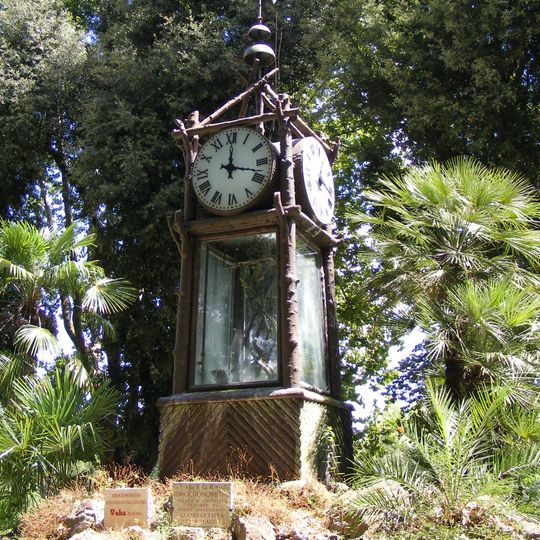
Hydrochronometer, clock, which works with water
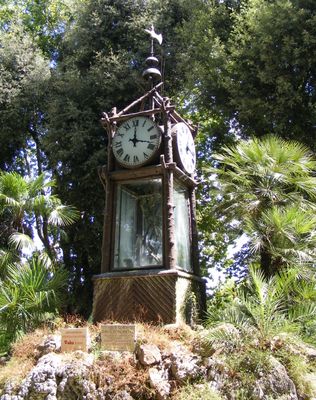
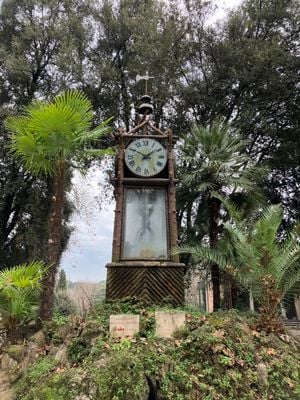
The hydrochronometer is a working water clock in Villa Borghese gardens that displays time through the flow of water. The device has a tower-like form made of cast iron with four dials showing Roman numerals and brass hands visible from all sides.
A priest and engineer named Giovan Battista Embriaco created the hydrochronometer in 1867 and displayed it at the Paris Universal Exposition that same year. In 1873, the working device was brought to Rome and installed in a fountain within Villa Borghese park, where it continues to function today.
The water clock was invented by a priest fascinated with mechanical engineering and timekeeping methods. Today it sits in Villa Borghese gardens, showing how 19th-century innovators used flowing water to measure hours and minutes alongside nature.
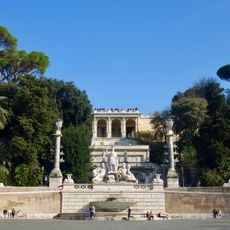
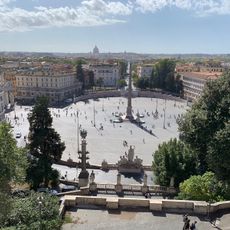
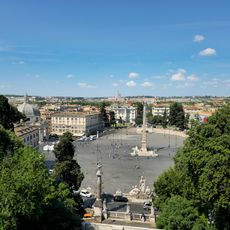
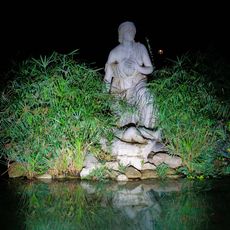
The site is easiest to find from the Pincio terrace, a popular viewpoint overlooking the park. The device stands on a small island in the middle of a small lake and is accessible by a wooden footbridge.
The device is remarkable because it has worked continuously for over 150 years, making it one of the oldest functioning water mechanisms in public gardens. This craftsmanship shows how innovation and skill can create something that truly stands the test of time.
The community of curious travelers
AroundUs brings together thousands of curated places, local tips, and hidden gems, enriched daily by 91,258 contributors worldwide.