Pincian Hill, Garden hill in northern Rome, Italy
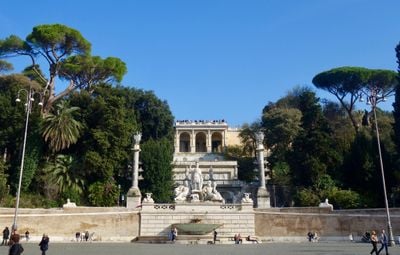
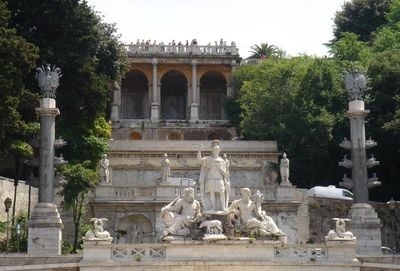
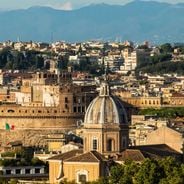
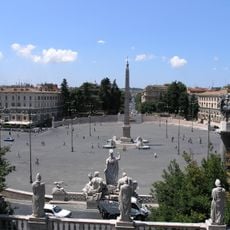
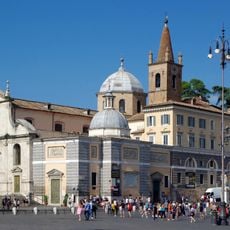
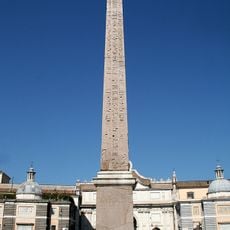
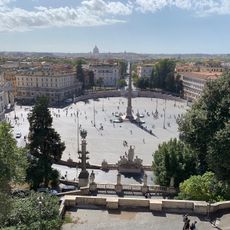
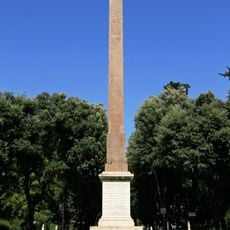
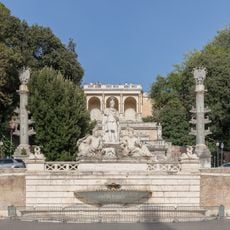
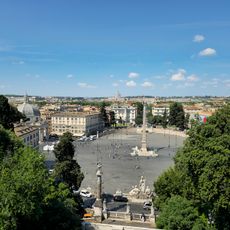
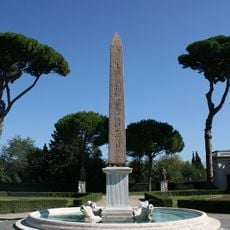
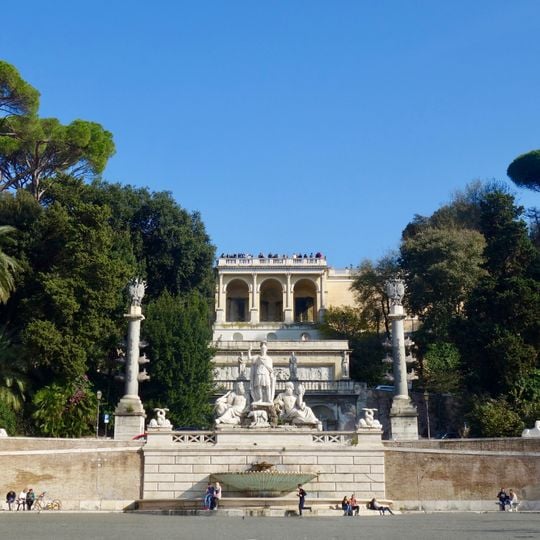
The Pincio is the hill north of the Quirinal, rising 61 m above the Campus Martius inside the Aurelian Walls. Its summit holds Rome's first public garden, laid out by Giuseppe Valadier between 1810 and 1818, with gravelled viali through dense boschi. Valadier linked the garden to Piazza del Popolo by formal staircases with wide landings and a switchback carriageway; a Roman obelisk erected by Pius VII in 1822 stands where radiating paths meet.
During Roman times, this hill was favored by wealthy families who built villas and private gardens on its slopes. Over centuries, it gradually became an artistic center, especially after the French Academy established itself here in the early 1800s.
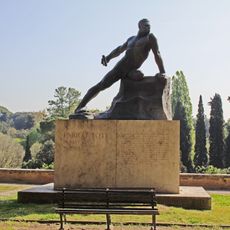
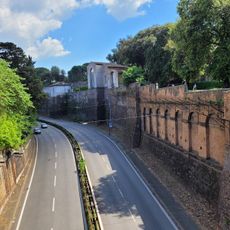
Giuseppe Mazzini urged that the garden's viali be lined with busts of notable Italians, and these sculptures still stand among the trees. The Villa Medici, home of the French Academy since 1802, occupies the hill's edge; the Pincio is linked to the Villa Borghese gardens by a pedestrian bridge over the via del Muro Torto.
Valadier linked Piazza del Popolo and the Pincio with formal staircases broken by wide landings, plus a switchback carriageway for those who prefer not to climb steps. From the terrace, gravel viali radiate from the obelisk erected by Pius VII in 1822. A pedestrian bridge over the via del Muro Torto connects the hill to the Villa Borghese gardens.
A 19th-century water clock designed by Giovanni Battista Embriaco sits on the hill as a reminder of older ways of measuring time. This mechanical device is among the last of its kind still visible to visitors today.
The community of curious travelers
AroundUs brings together thousands of curated places, local tips, and hidden gems, enriched daily by 94,625 contributors worldwide.