Carlo Bilotti Museum, Modern art museum in Villa Borghese, Italy
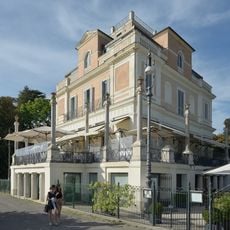
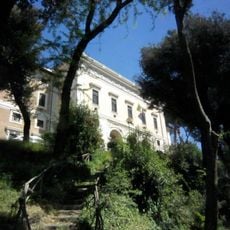
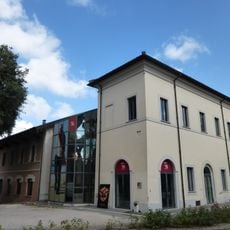
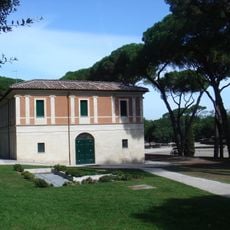
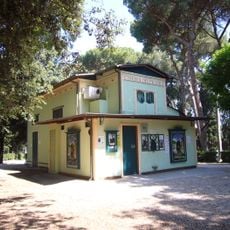
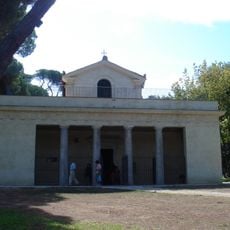
The Carlo Bilotti Museum occupies a restored historical building inside Villa Borghese park that once served as an Orangery. The structure houses contemporary artworks in an intimate setting designed for close viewing and contemplation.
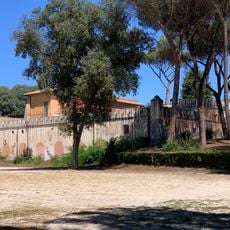
A building stood here before Cardinal Scipione Borghese's 17th-century works; in 1650 Manilli described it with two floors, a turret, covered loggias and a square courtyard with a ship-shaped fountain. Enlarged and frescoed from 1776 under Marcantonio IV Borghese, it became the Casino dei giuochi d'acqua. Destroyed in 1849 during the defence of the Roman Republic, it was rebuilt without decoration to shelter citrus trees in winter, hence the name Aranciera. Restored and painted red, it opened as the Carlo Bilotti museum.
The collection reflects one patron's vision for bringing together modern Italian and international artists under one roof. The works displayed here show how artists of different generations engaged with portraiture, sculpture, and painting during the contemporary era.
The museum sits within the Villa Borghese grounds, making it easy to combine with a park visit or nearby attractions. The collection is modest in size and can be viewed comfortably in under an hour.
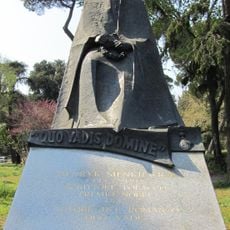
The museum holds 22 works, 18 of them by Giorgio De Chirico, including the terracotta Oreste e Pilade and a late replica of Interno metafisico con biscotti. Outdoors stand De Chirico's bronze Ettore e Andromaca and Giacomo Manzù's Grande cardinale, a 2004 cast from a 1965 original.
The community of curious travelers
AroundUs brings together thousands of curated places, local tips, and hidden gems, enriched daily by 94,381 contributors worldwide.